When History Costs You: The Fine Line Between Heritage Value and Romanticized Risk in Real Estate

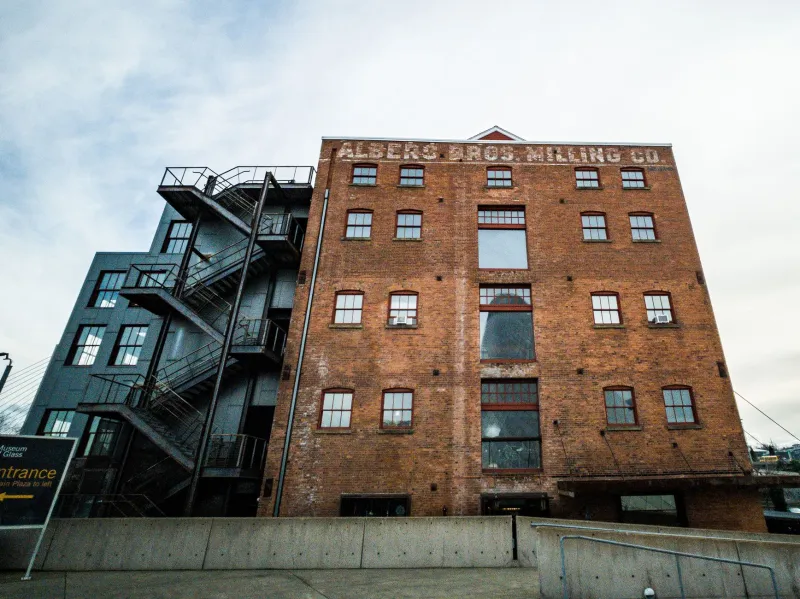
There is something almost irresistible about a property with a past. The worn brick facade, the century-old timber beams, the address that appears in old newspaper archives — these details do something to buyers that no freshly poured concrete development can replicate. They tell a story. And in today's market, stories carry a price tag.
But here is the question that too few buyers ask before signing: Is that story actually worth what they are being asked to pay?
At 118 Mill Street, we have spent considerable time examining the properties that hold genuine long-term value — and those that trade primarily on sentiment. The difference between the two is not always obvious at the closing table, but it becomes painfully clear a few years down the road.
The Emotional Architecture of Historic Purchases
Psychologists who study consumer behavior have long documented what they call the "narrative premium" — the tendency of buyers to assign elevated value to objects or places with compelling origin stories. Real estate is uniquely susceptible to this phenomenon. Unlike a piece of furniture or a vintage automobile, a property is not merely purchased; it is inhabited. Buyers do not just own the history. They imagine themselves living inside it.
This is not inherently irrational. Research consistently shows that well-maintained historic properties in established neighborhoods can outperform newer construction over long holding periods. Scarcity matters. Architectural authenticity matters. The cultural cachet of a genuinely significant address can translate into durable demand.
The problem arises when buyers mistake a romantic narrative for a financial thesis.
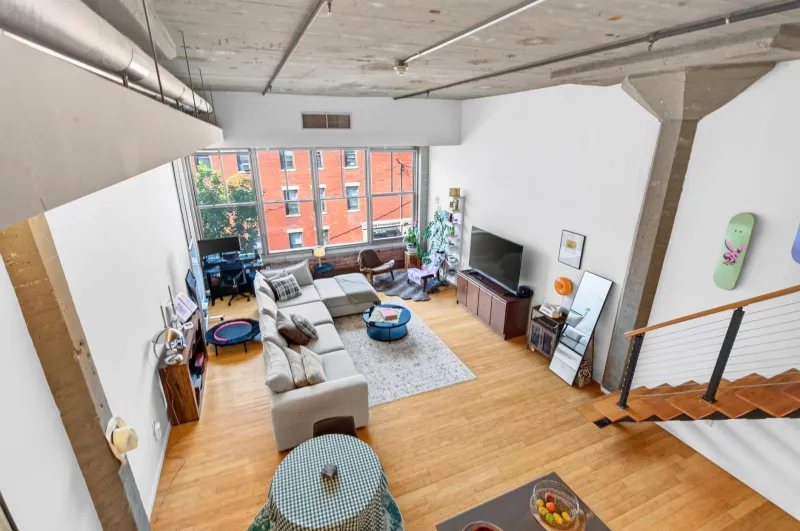
Consider the pattern that has emerged across several mid-sized American cities — places like Lowell, Massachusetts; Paterson, New Jersey; and Richmond, Virginia — where former industrial corridors have been repositioned as heritage destinations. Developers and listing agents in these markets have become extraordinarily skilled at packaging history as a luxury amenity. Exposed brick that once housed a textile operation becomes a design feature. A building's inclusion on a local historic register becomes a selling point rather than a regulatory constraint.
Buyers arrive, fall in love with the narrative, and frequently overpay.
Case Studies in Costly Nostalgia
The evidence is not merely anecdotal. A pattern of heritage-driven overpayment has been documented in markets ranging from New England mill towns to repurposed tobacco warehouses in the Carolinas.
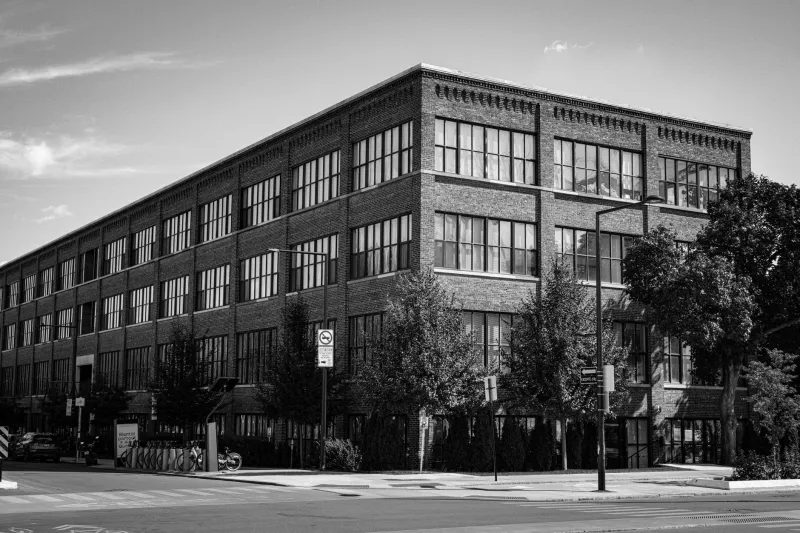
In one well-documented scenario in a northeastern mill district, a cohort of buyers paid significant premiums — in some cases 20 to 35 percent above comparable non-historic inventory — for units in a converted nineteenth-century factory. The building's architectural bones were genuine. The history was real. But the local employment base supporting the neighborhood had not meaningfully recovered from decades of deindustrialization. Within five years, resale values had stagnated while newer construction in adjacent, less storied neighborhoods appreciated steadily.
The buyers had purchased the story. The market, indifferent to sentiment, rewarded fundamentals.
A similar dynamic has played out in certain urban neighborhoods where a single historically significant block or building anchors an otherwise fragile real estate ecosystem. Buyers drawn by the prestige of the address frequently discover that the premium they paid was not supported by the surrounding infrastructure — schools, transit access, retail density, employer proximity — that drives sustained appreciation.
How Savvy Investors Separate Signal from Story
Experienced real estate investors approach heritage properties with a discipline that can feel almost clinical to the uninitiated. They do not dismiss the historical dimension — in fact, many actively seek it — but they subject it to rigorous scrutiny before allowing it to influence their offer price.
The first question they ask is deceptively simple: What is driving demand for this address beyond its history?
A genuinely appreciating heritage property typically sits at the intersection of authentic scarcity and contemporary utility. The architectural character is irreplaceable, yes — but the location also serves the real needs of today's residents or tenants. Access to employment, quality public schools, walkable amenities, and reliable transit are not romanticized abstractions. They are the mechanisms through which property values compound over time.
The second question is equally important: What are the ongoing costs of owning history?
Historic properties carry maintenance obligations that newer construction does not. Restoration work on original materials — cast iron windows, original hardwood flooring, century-old masonry — can be extraordinarily expensive. Properties listed on local or national historic registers may face restrictions on modifications that limit an owner's flexibility. Buyers who fail to model these costs accurately often find that the premium they paid on acquisition is compounded by the premium they pay every year simply to preserve what they bought.
A third consideration involves what might be called the authenticity audit. Not every property marketed as "historic" or "heritage" carries genuine architectural or cultural significance. In competitive markets, the language of heritage has been stretched to cover buildings that are merely old rather than meaningfully significant. Buyers should request documentation of any historic designation, research the property's actual role in the community's history, and consult with a preservation architect before accepting a seller's characterization at face value.
The Genuine Premium vs. The Inflated Narrative
None of this is an argument against purchasing historic properties. Some of the most compelling long-term investments in American real estate have been properties with genuine heritage credentials in neighborhoods where underlying fundamentals were equally strong. The mill districts that have genuinely transformed — think certain sections of Providence, Rhode Island, or the Corktown neighborhood in Detroit — succeeded because history and contemporary demand aligned rather than competed.
The distinguishing characteristic of these success stories is that the heritage dimension enhanced a fundamentally sound investment thesis rather than substituting for one. Buyers who purchased in these corridors were not simply acquiring a story. They were acquiring a scarce, architecturally distinctive asset in a location where demand was structurally growing.
The buyers who overpaid, by contrast, were purchasing the narrative in isolation — drawn by the emotional pull of a building's past without adequately interrogating whether the present and future could support the price.
A Framework for the History-Minded Buyer
For buyers genuinely drawn to properties with storied pasts — and there are sound reasons to be — a few principles can help calibrate enthusiasm with discipline.
First, treat the historical premium as a separate line item in your analysis. Identify what you would pay for an equivalent property without the heritage dimension, then ask yourself explicitly what you are willing to pay for the story. If that number exceeds ten to fifteen percent of the base value, demand rigorous justification.
Second, look beyond the building to the block, the neighborhood, and the metropolitan area. History does not appreciate in a vacuum. The properties that deliver on their heritage promise are invariably embedded in communities with diversifying economies, improving infrastructure, and growing populations.
Third, consult professionals who specialize in historic properties — not just general real estate agents, but preservation architects, historic tax credit specialists, and inspectors with experience in older construction. The hidden costs and constraints of historic ownership are not always visible to the untrained eye.
At 118 Mill Street, we believe deeply in the value of addresses with character and history. But we also believe that the most enduring investments are those where a property's past enriches a sound financial future — rather than concealing a fragile one. The nostalgia is real. The question is always whether the numbers are too.