Residential by Default: The Hidden Forces Steering Mill Conversions Away From Commercial Life
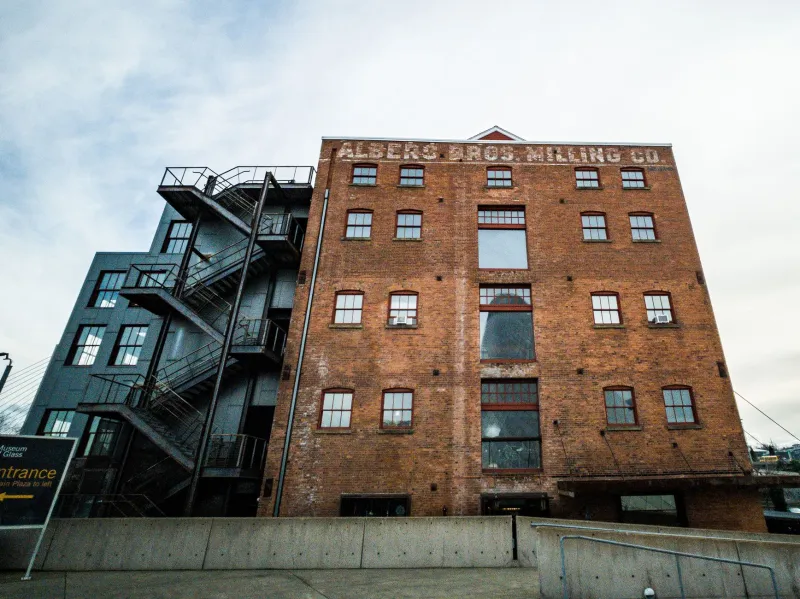
Stand at the edge of almost any mid-sized American city that once hummed with textile or manufacturing activity, and you will find some version of the same story. A sprawling brick mill—five stories of timber beam, arched windows, and worn hardwood floors—has been reborn. The loading docks are sealed. The freight elevators have been replaced by residential lobbies. And where workers once operated looms or lathes, tenants now arrange furniture and hang artwork.
The transformation is often beautiful. It is also, increasingly, inevitable—and the reasons why reveal something important about the economic logic shaping America's built environment.
The Path of Least Financial Resistance
Developers who rehabilitate historic industrial properties operate within a remarkably constrained set of choices, and those constraints are largely financial. The federal Historic Tax Credit (HTC), which offers a 20 percent credit against qualified rehabilitation expenditures, is available for both residential and commercial projects. In practice, however, the credit pairs far more cleanly with residential development.
The reason is straightforward: lenders and equity investors understand apartment buildings. The revenue model—monthly rents, predictable occupancy, well-established exit multiples—translates directly into the underwriting models that community development financial institutions and conventional lenders use every day. Commercial tenants, by contrast, introduce variables that many capital sources find uncomfortable: longer lease-up timelines, tenant improvement allowances, the possibility of anchor vacancies, and revenue streams that fluctuate with local business conditions.
When a developer stacks the federal HTC with state historic preservation credits—which exist in roughly 35 states—and layers in Low-Income Housing Tax Credits (LIHTC) for affordable residential units, the financial case for apartments becomes almost impossible to argue against. The LIHTC program alone has financed more than three million housing units since its creation in 1986, and its compatibility with historic mill rehabilitation has made it a cornerstone of adaptive reuse finance across the Northeast and Mid-Atlantic.
Commercial preservation, absent a comparable federal credit mechanism specifically designed for mixed-use or retail retention, simply cannot compete on the same financial terms.
What Gets Lost in the Conversion
The consequences of this residential tilt are not immediately visible. A converted mill is, by most measures, a preservation success: the building survives, the facade is maintained, the community gains housing. Local officials celebrate the ribbon cutting. Preservation advocates note the rescue of a structure that might otherwise have faced demolition.
But the economic function of that address changes fundamentally.
Mill buildings, at their commercial peak, were generators of employment density. They concentrated workers, suppliers, and ancillary businesses within a defined geography. When those buildings transition entirely to residential use, that employment density disappears. The neighborhood gains residents but loses the productive economic activity that historically made mill districts self-sustaining communities rather than bedroom annexes of larger employment centers.
Urban economists have a term for this phenomenon: the hollowing out of the employment base. It occurs gradually, conversion by conversion, until a district that once supported dozens of small businesses, light manufacturers, and creative enterprises becomes primarily a place where people sleep rather than work.
The irony is acute. Preservation policy, designed to maintain the character and vitality of historic districts, may inadvertently accelerate their economic simplification.
The Mixed-Use Middle Ground That Rarely Materializes
Ask almost any developer about mixed-use rehabilitation, and the response will include some version of the phrase "penciling out." Mixed-use projects—residential above, commercial below, with genuine commitments to activating ground-floor retail or light industrial space—are enormously appealing in concept and genuinely difficult to execute financially.
The complications are structural. Commercial ground-floor space in a rehabilitated mill often commands lower per-square-foot rents than the residential units above it, particularly in markets where the surrounding neighborhood is still in early stages of revitalization. Lenders who are comfortable financing a pure residential project become cautious when retail vacancy risk enters the equation. And the operational complexity of managing both residential tenants and commercial leases requires a different—and more expensive—management infrastructure.
Some developers have navigated these challenges successfully, particularly in markets with strong demand for maker spaces, creative offices, and food-and-beverage concepts. But these projects tend to require patient capital, sophisticated sponsorship, and a level of community infrastructure—anchor tenants, established foot traffic, proximity to transit—that many mill districts simply do not yet possess.
The result is a market where mixed-use rehabilitation remains the aspirational exception rather than the practical rule.
The Neighborhood Character Question
For communities watching their mill districts transform, the long-term implications extend well beyond any single building. Neighborhood character is, in part, a function of economic diversity—the coexistence of residents, workers, entrepreneurs, and institutions that creates the layered vitality distinguishing a genuinely urban neighborhood from a residential enclave.
When every significant adaptive reuse project defaults to apartments, that diversity erodes. The independent coffee shop that opens to serve new residents may not survive once the novelty fades. The small manufacturer who might have leased ground-floor space in a mixed-use building has nowhere to go. The artist or craftsperson seeking affordable work space—the very archetype of early-stage neighborhood revitalization—finds the market has moved on without them.
This is not an argument against residential conversion. In many markets, the housing need is genuine and urgent, and the transformation of vacant industrial buildings into apartments represents an unambiguous improvement over abandonment and decay. The question is whether the current incentive structure is producing the right balance, or whether it is systematically underproducing the commercial and mixed-use fabric that makes neighborhoods economically resilient over the long term.
Rethinking the Incentive Architecture
Several policy levers could, in theory, rebalance the equation. A federal commercial rehabilitation tax credit comparable in scale to the LIHTC would provide developers with a genuine financial alternative to pure residential conversion. Targeted grants or forgivable loans for mixed-use projects in historic districts could offset the additional complexity and risk. Zoning requirements mandating commercial activation of ground-floor space in mill rehabilitations—already in place in some municipalities—can preserve optionality even when market conditions make immediate commercial leasing difficult.
Some states have begun experimenting with these approaches. Massachusetts, Connecticut, and Rhode Island—states with deep concentrations of historic mill stock—have each modified or expanded their state historic credits in recent years, with varying degrees of attention to the mixed-use question. The results are instructive, if not yet definitive.
What is clear is that the current system, left unmodified, will continue producing the same outcome: beautiful buildings, well-occupied residential units, and neighborhoods that are quieter, less economically complex, and more financially fragile than their industrial predecessors.
The Address as Economic Ecosystem
At 118 Mill Street, we think often about what an address represents—not merely as a location, but as a node in a larger economic and social network. The mill buildings that anchor so many American communities were never just structures. They were ecosystems: places where capital, labor, and enterprise converged to produce something larger than any individual transaction.
Preserving the physical shell of those buildings while evacuating their economic function is a form of preservation that deserves honest scrutiny. The facades remain. The stories embedded in the brick and timber endure. But the vitality that made those addresses matter—the productive, messy, economically diverse activity that defined mill district life—requires more than a residential conversion to survive.
The incentive structures that shape adaptive reuse decisions are not immutable. They are policy choices, made by legislators and regulators who can revise them. The question for communities, investors, and policymakers alike is whether the current path is producing the neighborhoods they actually want—or simply the ones the spreadsheet makes easiest to justify.