The Perfection Penalty: Why the Fully Finished Neighborhood May Be the Riskiest Bet in Real Estate
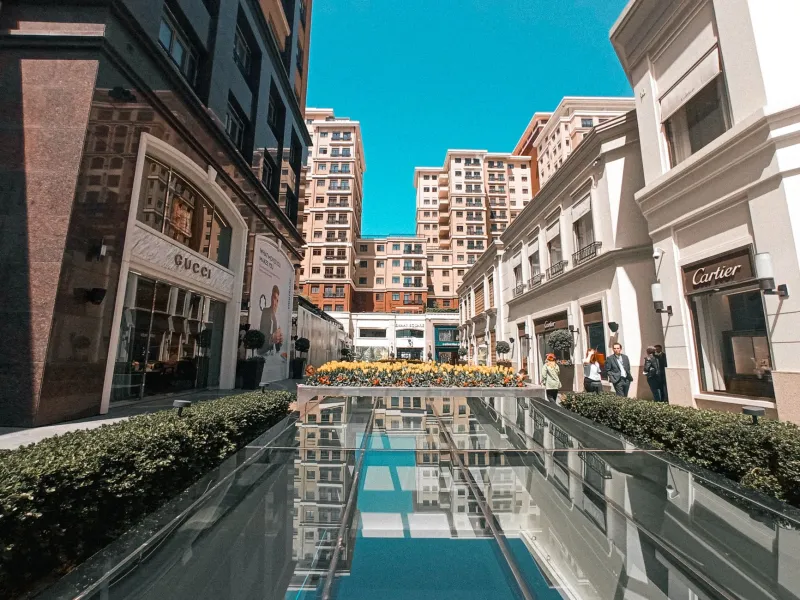
There is a particular kind of neighborhood that photographs beautifully. The streetscape is immaculate. The coffee is excellent. The fitness studio has a six-week waitlist, and the dog park is impeccably maintained. Every amenity a prospective buyer could want has been anticipated, packaged, and delivered with precision. On paper — and on Instagram — it is the ideal address.
Yet for a growing cohort of disciplined real estate investors, this portrait of perfection is precisely what gives them pause.
The logic of the fully amenitized neighborhood is seductive: reduced friction, established demand, and a ready-made lifestyle that commands a premium. What this logic obscures, however, is a fundamental principle of value creation. When everything desirable has already been priced in, there is very little room left for appreciation. You are not buying potential. You are buying the finished product — at full retail.
The Price of Paying for Perfection
Consider what it means, in practical terms, to purchase in a neighborhood that has reached peak desirability. Every restaurant that will open there has already opened. Every park improvement that will attract families has already been funded. Every transit upgrade that would have moved the needle on commute times has already been completed. The story, in other words, has already been told.
In real estate, the greatest gains are almost always captured by those who arrive before the story is widely understood — not by those who purchase the hardcover edition at full price once it has become a bestseller.
Data from markets across the United States consistently supports this observation. Neighborhoods that were still considered transitional a decade ago — areas like East Nashville, the Pilsen corridor in Chicago, or Kensington in Philadelphia — delivered appreciation rates that mature, amenity-rich districts simply could not match. The buyers who accepted a degree of inconvenience in exchange for a lower entry point were, in many cases, the buyers who built the most meaningful equity.
The Psychology Behind the Premium
Why, then, do so many buyers and investors continue to gravitate toward the finished neighborhood? The answer is largely psychological, and it is worth examining honestly.
Human beings are risk-averse by nature. The presence of established amenities functions as social proof — evidence that other people have already made the same judgment and found it sound. A neighborhood with a Whole Foods, a Sweetgreen, and a boutique fitness concept signals that institutional brands with sophisticated site-selection teams have done the due diligence on your behalf. It feels safe.
What this comfort costs, however, is the upside. The premium embedded in that sense of safety is real, and it comes directly out of the returns that would otherwise accrue to a buyer who was willing to tolerate a little uncertainty.
There is also the matter of lifestyle bias. Buyers who are purchasing a primary residence often conflate personal preference with investment logic. They want the neighborhood with the best restaurants because they intend to eat in those restaurants. That is an entirely reasonable desire. But it is worth being clear-eyed about the distinction between buying a lifestyle and building wealth — because the two goals do not always point toward the same address.
What Organic Growth Actually Looks Like
The neighborhoods that have historically delivered the strongest long-term returns share a common characteristic: they had the bones to support growth before that growth was broadly visible. A walkable street grid. Proximity to employment centers or transit corridors. Architectural character that could not be easily replicated. Underutilized commercial space with genuine adaptive potential.
These are the qualities that precede amenity development rather than follow it. When a neighborhood possesses them, the coffee shop and the wine bar and the independent bookstore tend to arrive organically — drawn by foot traffic, affordable rents, and the creative energy that gathers where things are still being built rather than merely maintained.
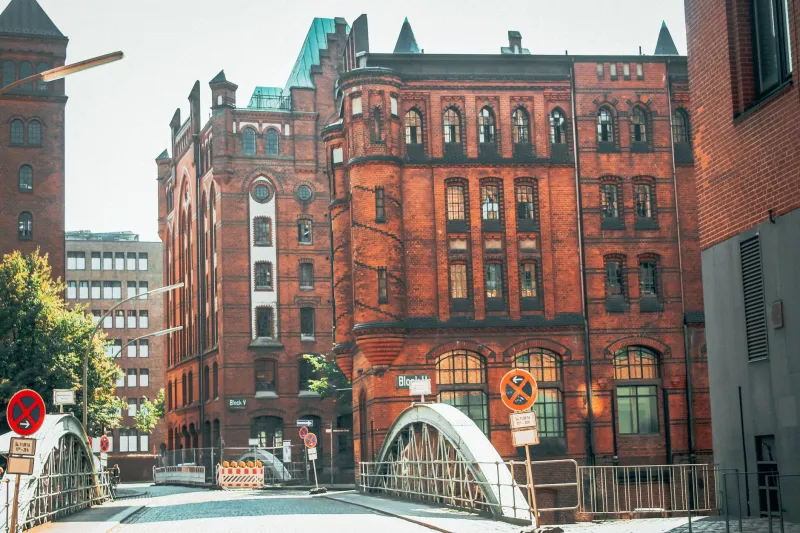
Mill districts offer a particularly instructive case study. Across the country, former industrial addresses — the kind defined by exposed brick, timber framing, and the architectural vocabulary of productive labor — have demonstrated a remarkable capacity for reinvention. The physical character of these spaces attracted early adopters: artists, founders, and community organizers who were less interested in pre-packaged amenities than in the raw material of a place with genuine history. The amenities followed. And so did the appreciation.
The lesson is not that investors should seek out the most distressed address they can find. It is that the presence of character and infrastructure potential matters more, over time, than the presence of a curated tenant mix.
The Saturation Ceiling
There is a practical limit to how much a fully developed neighborhood can appreciate, and it is worth understanding the mechanics of that ceiling.
Appreciation is driven, in large part, by expanding demand and improving perception. A neighborhood that is already perceived as desirable by virtually everyone in its target market has, by definition, captured most of the demand it is likely to capture. Future price growth becomes dependent almost entirely on macroeconomic conditions — rising incomes, falling interest rates, broader market momentum — rather than on any neighborhood-specific dynamic.
Contrast this with an emerging address. As new businesses open, as infrastructure improves, as the demographic composition shifts and the narrative around the neighborhood begins to change, each development represents a new catalyst for expanding demand. The ceiling is higher because the starting point is lower, and because there are still meaningful stories left to tell.
This is not a minor distinction. In a market environment where overall appreciation has moderated and buyers are scrutinizing value more carefully than they have in years, the difference between an address with room to grow and one that has already grown can be the difference between a sound investment and a stagnant one.
Recalibrating the Definition of a Desirable Address
None of this is an argument against amenities. Walkability matters. Access to quality schools matters. Retail vitality and green space and transit connectivity all matter — both to quality of life and to long-term property value. The question is not whether these things are desirable. It is whether you are paying for them at a point in time when the price still reflects their future potential, or whether you are paying for them after that potential has already been fully extracted.
At 118 Mill Street, we believe that the most compelling addresses are rarely the ones that have already arrived. They are the ones that are in the process of becoming — places where the infrastructure is sound, the character is authentic, and the full story has not yet been written. Those are the addresses where buyers and investors can still participate meaningfully in the creation of value, rather than simply purchasing what others have already created.
Perfection, as it turns out, has a price. And in real estate, that price is usually paid in foregone appreciation.