Numbers Don't Lie: The Hidden Economics of Address Perception and What It Means for Your Property's Value
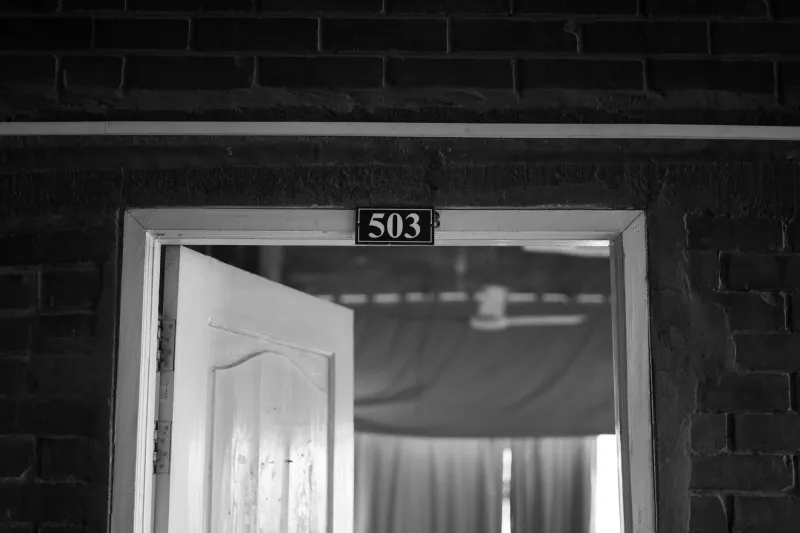
When prospective buyers pull up a listing, they encounter the address before they encounter the property itself. That sequence matters more than the industry has traditionally acknowledged. A street number, a directional suffix, a historic name — each element functions as a first impression that primes the emotional and financial calculus of everyone who reads it. At 118 Mill Street, where the address itself is part of the narrative, we have a particular interest in how those characters on a page translate into dollars at the closing table.
The Psychology Behind Street Numbers
Numerology may seem like the province of superstition rather than real estate economics, but the data suggests otherwise. Academic research conducted across multiple U.S. metropolitan markets has consistently found that properties bearing the number 13 sell at a measurable discount — sometimes as much as two to four percent below comparable homes on the same block. Conversely, certain numbers carry cultural cachet that elevates perceived desirability. The number 8, long associated with prosperity in Chinese cultural tradition, commands documented premiums in cities with substantial Asian American populations, including San Francisco, Los Angeles, and portions of the greater New York metro area.
Beyond cultural numerology, there is a more universal psychology at work. Round numbers — addresses ending in 00 or 50 — tend to read as institutional or commercial, subtly undercutting the residential warmth that drives emotional buying decisions. Odd numbers, by contrast, feel more organic, more residential, more personal. These are not conscious calculations buyers articulate; they are impressionistic responses that nonetheless show up in offer prices and days-on-market statistics.
Alphabetical Naming and the Street Hierarchy Effect
In cities laid out according to alphabetical street grids — Washington, D.C., and Philadelphia among the most prominent examples — buyers have long internalized a quiet hierarchy. Streets earlier in the alphabet, particularly those with single-syllable or historically significant names, carry reputational weight that later streets simply do not. In the District of Columbia, the difference between a property on a named cross street versus a lettered or numbered corridor can represent tens of thousands of dollars in perceived value, even when physical proximity, lot size, and structural condition are nearly identical.
This phenomenon extends beyond Washington. Across the Mid-Atlantic and parts of the Midwest, where grid-based platting was common in the nineteenth century, buyers have absorbed a generational understanding of which blocks carry prestige and which do not. Real estate professionals operating in these markets quietly account for alphabetical positioning when advising clients on pricing strategy — a practice that rarely appears in listing documents but consistently influences outcomes.
When a Name Change Rewrote the Market
Perhaps the most compelling evidence for address economics comes from cases where streets or properties were deliberately renamed — and the market responded accordingly.
In Miami's Wynwood district, the rebranding of industrial corridors from purely numerical designations to named streets coincided with a period of accelerating appreciation that outpaced adjacent neighborhoods. While multiple factors contributed to Wynwood's transformation, real estate analysts noted that the humanization of street nomenclature — giving blocks identities that invited storytelling — reduced psychological friction for buyers and tenants who might otherwise have perceived the area as transitional.
A more granular example: In Chicago, a stretch of properties that had long carried the designation of a numbered side street was administratively assigned an honorary name recognizing a community figure. Within eighteen months of the renaming, average sale prices along that corridor increased at nearly double the rate of the surrounding zip code. Realtors working the area reported that the honorary designation — even though legally secondary to the official address — appeared prominently in marketing materials and generated measurably stronger initial inquiry.
Similar dynamics have played out in smaller markets. A mid-sized city in the Carolinas undertook a systematic renaming of several industrial-era streets that carried utilitarian designations — names like Factory Row and Depot Lane — replacing them with references to the region's natural landscape and colonial history. The rebranding effort, paired with streetscape improvements, contributed to a sustained uptick in commercial leasing interest and residential conversion activity that city planners have cited in subsequent economic development reports.
The Rebranding Calculus for Individual Properties
For owners and investors, these case studies raise a practical question: can an individual property benefit from address repositioning, and if so, how?
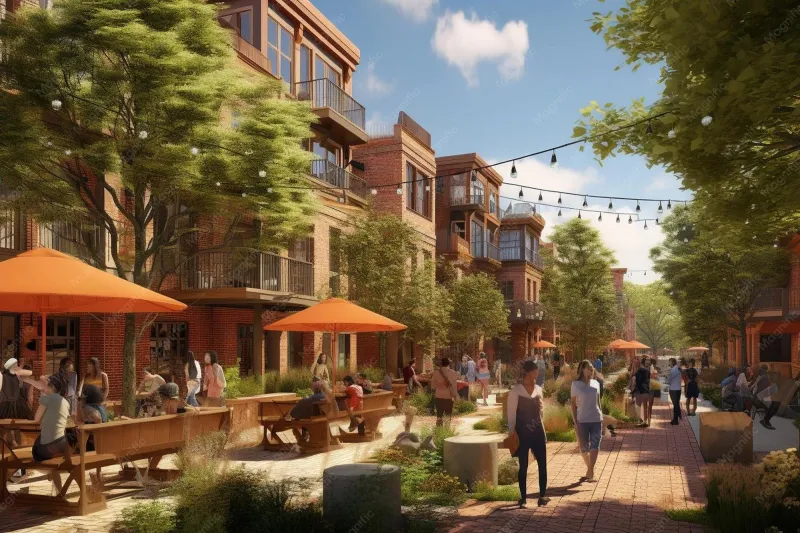
The answer is nuanced. Municipal address changes require formal petition processes that vary considerably by jurisdiction, and not every request is granted. However, there are adjacent strategies that deliver comparable results. Developments that market under a project name — rather than leading with a street number — effectively create a secondary identity that shapes perception before a buyer ever registers the official address. This approach is standard practice in luxury residential development and increasingly common in mixed-use adaptive reuse projects, where a building's former industrial identity is leveraged as a brand asset.
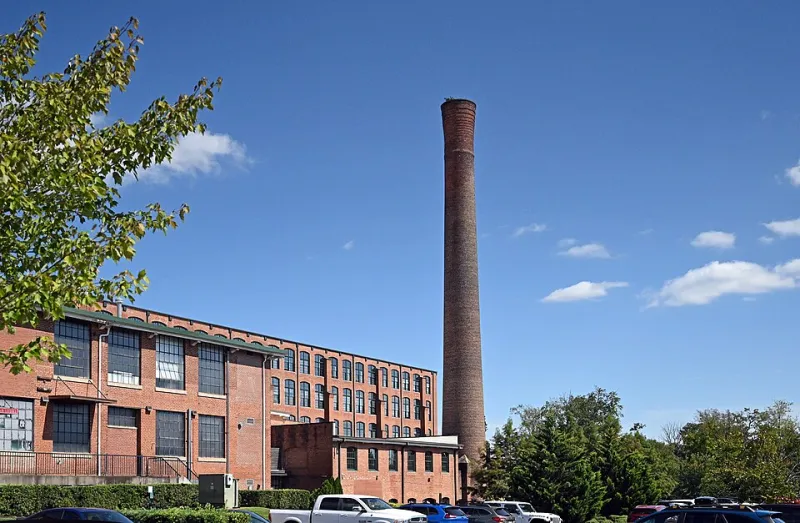
118 Mill Street itself exemplifies this principle. The address is not merely a locational identifier; it is a declaration of provenance, a signal of the layered history that distinguishes adaptive reuse properties from their purpose-built counterparts. The name carries the weight of the mill district tradition — craftsmanship, community, transformation — in a way that a purely numerical designation never could.
What Buyers and Investors Should Ask
For anyone evaluating a property acquisition, address perception deserves a place in due diligence alongside the more conventional metrics of square footage and cap rate. Several questions are worth posing explicitly:
Does the street name carry positive or negative associations within the local market? This requires conversation with experienced local agents, not just algorithmic data pulls.
Is the street number likely to create friction with any significant buyer demographic in the target area? In markets with large communities for whom certain numbers carry cultural meaning, this question has direct financial implications.
Does the property sit within a named district or corridor that could be leveraged in marketing? Mill districts, arts districts, and heritage corridors all offer naming infrastructure that can amplify a property's address identity.
Has the street or address undergone any recent renaming or rebranding? If so, it is worth examining whether market data reflects a pre- or post-rebrand baseline.
The Quiet Multiplier
Address perception will never appear as a line item on an appraisal. It will not surface in a title report or a structural inspection. But it operates as a quiet multiplier on every other variable in a transaction — amplifying the appeal of a well-located property or compressing the ceiling of one that carries an address with unexamined baggage.
For buyers, sellers, and investors who take the long view, understanding how street numbers and naming conventions shape first impressions is not an academic exercise. It is a competitive advantage, embedded in plain sight, waiting to be read.