Odd Angles, Outsized Returns: Why the Real Estate World Is Reassessing the Corner Parcel
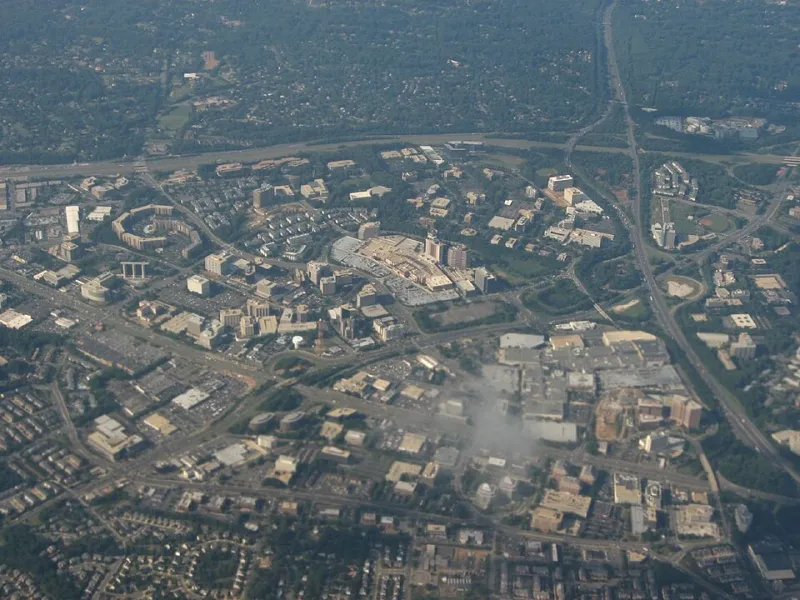
Photo: Ken Lund from Reno, Nevada, USA, CC BY-SA 2.0, via Wikimedia Commons
For decades, corner lots and irregularly shaped parcels were treated as the awkward remainders of urban planning — properties that lingered on the market while their rectangular neighbors sold quickly. That calculus is changing, as architects, entrepreneurs, and institutional investors discover that geometric unconventionality may be one of the most underpriced advantages in today's property landscape.
At 118 Mill Street, where the relationship between a property's physical character and its long-term value is a central preoccupation, the renewed attention given to corner and oddly configured parcels feels less like a trend and more like a long-overdue correction.
The Historical Stigma — and Why It Never Fully Made Sense
The conventional wisdom around corner lots has always been somewhat contradictory. On one hand, commercial real estate practitioners have long understood that corner visibility is a premium attribute — anchor tenants in retail strips routinely pay higher rents for end-cap positions precisely because they benefit from dual street exposure. On the other hand, residential buyers and smaller investors frequently avoided corner parcels, citing concerns about traffic noise, reduced privacy, dual sidewalk maintenance obligations, and the perceived complexity of building on an irregular footprint.
What this conventional hesitancy obscured was a fundamental truth: the same properties that posed modest lifestyle inconveniences for single-family homeowners were, in many cases, extraordinarily well-positioned for adaptive reuse, mixed-use development, and the kind of flexible commercial programming that defines the contemporary built environment.
The result was a persistent valuation gap — one that patient, forward-thinking investors are now actively closing.
Geometry as Competitive Advantage
The shift begins with architecture. A generation ago, irregular lot geometry was primarily viewed as a constraint — something a builder worked around rather than with. Today, a growing cohort of architects and developers treats non-rectangular parcels as generative design prompts. The angular facades, triangulated floor plans, and unexpected sight lines that emerge from building to the edges of an odd-shaped lot are increasingly celebrated as distinguishing features rather than tolerated compromises.
This reframing matters commercially. In an era when virtually every new mixed-use building in a secondary American city risks blending into a backdrop of interchangeable glass-and-steel construction, a property that is visually distinctive by virtue of its geometry carries a marketing advantage that no amount of interior finish can fully replicate. The building itself becomes a landmark — and landmarks, in real estate, command premiums.
Consider the broader context: adaptive reuse projects across former mill districts, foundry blocks, and warehouse corridors have demonstrated repeatedly that spatial idiosyncrasy — exposed columns in unexpected locations, ceiling heights that vary room to room, load-bearing walls that bisect what might otherwise be open floor plans — translates into desirability rather than dysfunction when positioned correctly. Corner parcels operate on a similar principle. Their unconventionality is the asset.
The Flexible Workspace Revolution and the Corner Lot's Moment
The structural shift toward flexible, hybrid, and project-based work has accelerated demand for commercial spaces that resist easy categorization. Coworking operators, creative studios, boutique hospitality concepts, and specialty food-and-beverage tenants are all actively seeking addresses that offer something beyond the standardized suite. They need spaces that can be configured and reconfigured, that photograph well for social media, and that communicate a brand identity the moment a client or customer walks through the door.
Corner parcels, with their multiple points of entry, expanded glazing opportunities, and inherent visual prominence, are exceptionally well-suited to this demand profile. A corner address in a revitalizing urban neighborhood is not merely a place to conduct business — it is, in itself, a form of brand communication. The address does work that interior design alone cannot accomplish.
This dynamic is particularly pronounced in the mid-sized American cities — Chattanooga, Asheville, Boise, Richmond, and their peers — where downtown revitalization efforts have created concentrated zones of commercial activity in formerly underutilized districts. In these environments, corner parcels at key intersections have become among the most contested assets in local investment markets.
Residential Reconsideration
The reassessment is not limited to commercial applications. In residential markets, particularly in dense urban neighborhoods where lot sizes are constrained and privacy is already a relative concept, the traditional objections to corner living have lost much of their force. Buyers who might once have filtered out corner properties are now weighing those same properties' expanded natural light, cross-ventilation potential, and — in markets where accessory dwelling units are permitted — the additional development flexibility that a larger or more irregularly configured lot can provide.
In cities where municipalities have relaxed zoning restrictions to allow ADUs, duplexes, and small multifamily structures on previously single-family-zoned land, corner lots frequently offer the square footage and setback configurations that make such additions feasible when comparable mid-block parcels do not. The investor who purchases a corner lot today in a market undergoing zoning liberalization may be acquiring not one income-generating unit but the optionality to create two or three — a distinction that fundamentally alters the investment thesis.
Due Diligence for the Unconventional Parcel
None of this is to suggest that corner lots and irregular parcels are uniformly attractive or that their geometric characteristics override the fundamentals of location, condition, and pricing. Careful due diligence remains essential, and several factors warrant particular scrutiny.
Municipal regulations governing setbacks, lot coverage, and building envelope can interact with irregular geometry in ways that are not immediately obvious. A parcel that appears to offer substantial buildable area may, upon closer examination, be significantly constrained by corner setback requirements that apply on both street frontages simultaneously. Prospective buyers should engage a local architect or land-use consultant early in the evaluation process — ideally before an offer is submitted — to develop a realistic picture of what can actually be built.
Traffic patterns, particularly in urban environments, deserve honest assessment. A corner positioned at a high-volume intersection may offer excellent visibility for commercial tenants while presenting genuine livability challenges for residential occupants. The investor's intended use should drive the evaluation of this factor rather than a generic assumption about whether corner exposure is positive or negative.
Finally, the condition of existing improvements on irregular parcels can be deceptive. Buildings constructed to maximize coverage on non-standard lots sometimes incorporate structural solutions — cantilevered sections, non-standard framing configurations, unusual foundation approaches — that carry higher maintenance or renovation costs than a conventional structure of comparable size. A thorough inspection by a qualified structural engineer is advisable.
The Broader Lesson for Today's Investor
What the reassessment of corner and irregular parcels ultimately reflects is a maturation in how serious real estate investors think about value. The most straightforward properties — rectangular lots, standard configurations, conventional layouts — are also the most efficiently priced. The market has had decades to reach consensus on what they are worth. Properties that fall outside easy categorization, by contrast, are more likely to be mispriced, and mispricing creates opportunity.
At 118 Mill Street, that principle feels foundational. The addresses that tell the most compelling stories are rarely the ones that conform most neatly to expectation. Sometimes the most interesting corner in the room is, quite literally, the corner — the one where two streets meet, two sight lines converge, and a property's unconventional geometry becomes the very thing that sets it apart.