The Number on the Door: How Address Digits Shape Buyer Psychology, Property Values, and Community Identity
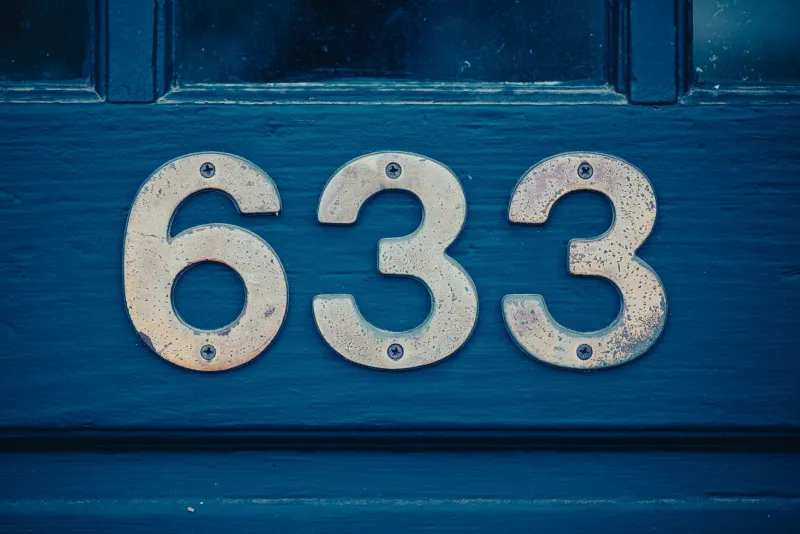
At 118 Mill Street, we believe every space tells a story. But sometimes that story begins before a prospective buyer ever steps inside — before the open house, before the inspection, before a single square foot is measured. Sometimes it begins with the number on the door.
Address numerology occupies an unusual corner of American real estate: widely dismissed by economists, quietly acknowledged by seasoned brokers, and deeply meaningful to a significant — and growing — share of the buying public. Whether you are an investor evaluating a portfolio of properties or a first-time buyer choosing between two comparable listings on the same block, the digits assigned to your address may be influencing decisions in ways that are both measurable and largely invisible to the mainstream market.
The Cultural Architecture of Numbers
The United States is home to one of the most diverse property-buying populations on earth, and that diversity extends to deeply held beliefs about numerical significance. Nowhere is this more evident than in cities with large Asian-American communities — San Francisco, Los Angeles, New York, Houston, and Seattle among them — where the number eight carries extraordinary cultural weight.
In Chinese tradition, eight is considered profoundly auspicious, its pronunciation in Mandarin closely resembling the word for prosperity. The number four, by contrast, sounds similar to the word for death and is frequently avoided. These are not fringe superstitions confined to a small demographic. They represent the purchasing calculus of millions of American buyers and renters who factor numerical symbolism into decisions involving hundreds of thousands — sometimes millions — of dollars.
Real estate professionals operating in these markets have long understood the premium attached to addresses containing eights. Properties at 888, 8888, or even 118 — a combination that many interpret as promising wealth and good fortune — routinely attract heightened interest and, in competitive markets, measurably higher offers. One well-documented case involved a Vancouver property that sold for approximately $2.1 million above its assessed value, with its address cited explicitly by the buyer as a contributing factor. While American markets rarely reach such extremes, the underlying dynamic is present and active from Flushing, Queens to the San Gabriel Valley.
When History Assigns Value to a Number
Numerological significance is not exclusively a matter of cultural tradition. In certain American cities, specific address numbers carry historical weight that translates directly into market premiums.
Consider properties situated at historically significant numbers along famous boulevards — addresses that have appeared in literature, film, or landmark events. The number 1600, for obvious reasons, carries a particular resonance in Washington, D.C. Addresses along Route 66 communities that preserve their original numbering systems attract buyers seeking a tangible connection to American mythology. In New Orleans, certain numbered addresses in the French Quarter command premiums that have as much to do with their place in the city's cultural narrative as their physical condition.
For commercial tenants, this dynamic is even more pronounced. A business operating at a historically recognized address benefits from implied credibility — a form of borrowed prestige that no marketing budget can fully replicate. Investors who recognize this tend to prioritize address identity when evaluating commercial acquisitions, understanding that the right number can reduce vacancy risk and support stronger lease terms over time.
The Behavioral Economics Behind the Digits
Beyond cultural tradition and historical resonance lies a more broadly applicable phenomenon: the cognitive shortcuts that all buyers — regardless of background — use when processing address information.
Research in behavioral economics consistently demonstrates that round numbers, sequential digits, and repeated numerals are processed more fluently by the human brain. Properties at addresses like 100, 200, or 555 are easier to remember, easier to communicate, and easier to locate — practical advantages that translate into subtle but real market benefits. A business at a memorable address is more likely to be found by first-time visitors, more likely to be recalled in word-of-mouth referrals, and more likely to appear correctly in online searches.
For residential buyers, the effect is somewhat different but equally present. An address that feels balanced, harmonious, or simply easy to say aloud tends to generate a marginally more positive first impression — a psychological advantage that, in competitive markets, can tip the scales during an otherwise even evaluation.
Some brokers have begun describing this phenomenon as "address fluency" — the ease with which a number can be processed, remembered, and communicated. Properties with high address fluency tend to show better online engagement metrics, receive more inquiries per listing view, and move slightly faster than comparable properties with less memorable numbers. In a market where days on market directly influences negotiating leverage, even modest differences in initial engagement carry real economic consequences.
The Unlucky Numbers Buyers Quietly Avoid
If certain numbers attract buyers, others demonstrably repel them. Thirteen is the most familiar example in American culture — a superstition so embedded in the national consciousness that many high-rise buildings simply skip it in their floor numbering, leaping from twelve to fourteen without acknowledgment or apology. This practice is not confined to older buildings; contemporary luxury developments in Chicago, Miami, and New York continue to omit the thirteenth floor as a matter of course.
At the address level, the effect is more diffuse but not absent. Properties numbered 13 in communities where superstition carries cultural weight can face longer market times and softer offers — not dramatically, but consistently enough that experienced brokers factor it into their pricing strategies. In markets with significant Asian-American buyer pools, addresses containing four face analogous headwinds.
Savvy sellers in these situations have pursued address changes with their municipal governments — a process that is possible in many jurisdictions and, when successful, has been documented to produce measurable improvements in market reception. The administrative effort involved is not trivial, but for a property sitting unsold or underperforming, it represents a relatively low-cost intervention with potentially significant upside.
What This Means for Investors and Buyers
The practical implications of address numerology for property decision-making are more significant than most market participants acknowledge. For investors, understanding the numerical preferences of the target tenant or buyer demographic represents a meaningful edge — one that costs nothing to acquire and can influence both acquisition pricing and exit strategy.
A commercial investor acquiring a retail property in a neighborhood with a growing Asian-American population, for instance, would be wise to consider whether the address is likely to attract or deter prospective tenants from that community. A residential developer with the flexibility to assign unit numbers within a new building can optimize those assignments to align with the cultural preferences of the anticipated buyer pool — a small decision with potentially meaningful consequences for absorption rates and achieved pricing.
For individual buyers, the takeaway is simpler: be aware of what the number on the door means — to you, to the community around you, and to the buyers who will eventually succeed you. In a market where every advantage matters, the digits assigned to a property are not merely a postal convenience. They are part of the asset's identity, embedded in its story from the moment it was first addressed.
At 118 Mill Street, we have always understood that an address is more than a location. It is a narrative. And sometimes, the first chapter of that narrative is written in numbers.