Below the Surface: How Finished Basements Are Quietly Reshaping Property Valuations Across America
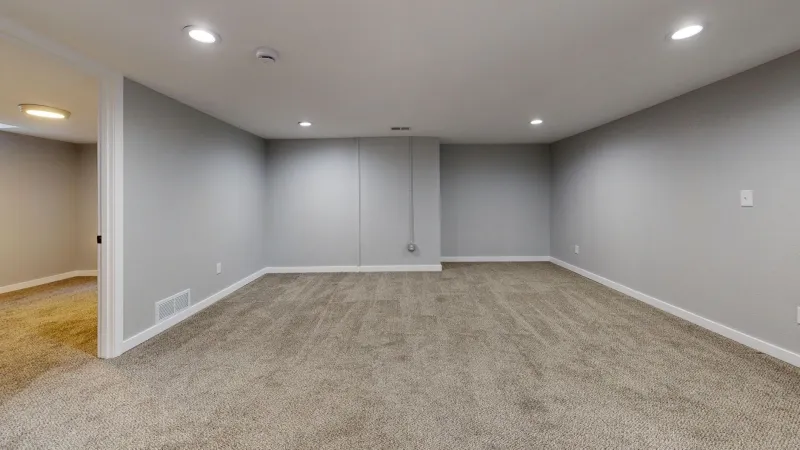
For generations, the American basement occupied an ambiguous position in the residential imagination—simultaneously part of the home and somehow apart from it. Utility pipes ran overhead, bare concrete absorbed the cold, and the space served principally as a repository for seasonal decorations and aging appliances. That era, by most accounts, is drawing to a close.
Across the country, homeowners and real estate investors are recognizing that below-grade square footage, when developed with intention, represents one of the more underappreciated levers in property valuation. The economics are compelling, the demand is real, and the generational appetite for flexible living environments has turned the once-humble cellar into a genuine strategic asset.
The Economics of Going Down
The fundamental appeal of basement renovation rests on a straightforward proposition: the structural envelope already exists. Unlike an addition, which requires excavation, foundation work, framing, and exterior finishing, a basement improvement begins with four walls already in place. Contractors and homeowners alike frequently cite this as the reason basement projects can deliver a favorable ratio of cost to added value.
According to data compiled by Remodeling Magazine's annual Cost vs. Value Report, a midrange basement finish typically returns somewhere between 70 and 75 cents on every dollar invested—a figure that compares favorably with many above-grade renovation categories. In high-demand urban and suburban markets, that figure can climb appreciably higher, particularly when the finished space is configured to serve as a legal accessory dwelling unit or a dedicated home office suite.
The distinction between a cosmetically finished basement and one that meets local code requirements for habitable space is not trivial. Ceiling height, egress windows, proper insulation, and ventilation standards all determine whether square footage qualifies as livable area under appraisal guidelines. Investors who understand these thresholds—and plan their renovations accordingly—position themselves to capture the full valuation benefit of their improvements.
How Appraisers See the Space
The appraisal question is where below-grade improvements become genuinely nuanced. Under Fannie Mae guidelines, finished basement square footage is generally not counted in a home's gross living area—the figure most commonly cited in listings and used as the primary basis for comparison. Instead, appraisers are expected to note finished below-grade space separately, applying a value adjustment that reflects local market conditions.
This distinction matters enormously for buyers and sellers alike. In markets where finished basements are common—the Midwest, the mid-Atlantic, and much of New England—appraisers have ample comparable sales data to support meaningful value adjustments. In regions where basements are rare or structurally impractical, such as parts of the Gulf Coast and the Pacific Southwest, the same improvement may generate a more modest premium simply because the local market has less familiarity with the product.
For investors operating in mill towns and older industrial corridors—communities where sturdy, century-old construction frequently includes deep, structurally sound basements—this regional calculus can be particularly favorable. Properties in these neighborhoods often carry below-grade bones that newer construction cannot replicate at comparable cost.
The Flexibility Premium
If the economics of basement renovation are compelling, the demand side of the equation is arguably even more interesting. The cohort of buyers now entering peak homebuying years—broadly, those in their late twenties through early forties—has demonstrated a consistent preference for spaces that resist singular definition. A room that functions as a home gym on Tuesday, a remote-work studio on Wednesday, and a guest suite over the weekend is not a compromise; it is, for many buyers, an explicit aspiration.
The basement is uniquely suited to this flexibility. Separated from the primary living floors by both physical distance and acoustic insulation, it offers a degree of autonomy that above-grade bonus rooms often cannot match. Parents converting below-grade space into an apartment for an aging relative, young professionals building out podcast studios, and remote workers seeking genuine separation between professional and personal environments have all contributed to a broadening of what buyers expect a finished basement to provide.
This shift in expectations has not gone unnoticed by listing agents. Properties marketed with detailed descriptions of finished basement configurations—complete with photographs that communicate the quality of the finish and the thoughtfulness of the layout—consistently generate stronger initial engagement than comparable listings that treat below-grade space as an afterthought.
Factoring Basement Potential Into Address Selection
For buyers willing to look beyond the immediately apparent, unfinished basement square footage represents a form of latent value that the market does not always price efficiently. A property listed with an unfinished basement may carry a lower asking price than a comparable home with a completed lower level, even when the structural and mechanical prerequisites for a high-quality renovation are already in place.
Identifying that potential requires a specific kind of due diligence. Buyers should assess ceiling height with care—eight feet of clearance is generally considered the threshold for a comfortable finished space, while anything below seven feet will limit both the quality of the end product and the valuation benefit. The presence of existing egress windows, or the feasibility of adding them, is equally important for any configuration that includes a sleeping area. Moisture history, drainage infrastructure, and the condition of the existing mechanical systems all factor into the realistic cost of conversion.
In older housing stock—particularly the kind found in communities built around manufacturing and mill industries, where basement construction was designed to accommodate heavy equipment and substantial structural loads—these prerequisites are frequently met. The bones are sound. What remains is the vision and the willingness to invest in a space that has historically been dismissed as secondary.
A Strategic Consideration for the Long Term
Real estate decisions, at their most considered, are exercises in thinking across time. The finished basement that adds modest value today may prove considerably more consequential over a longer holding period, particularly as housing density pressures in established communities continue to intensify and the demand for flexible, multi-use square footage shows no credible signs of abating.
For homeowners, the calculus involves weighing renovation costs against both immediate quality-of-life improvements and eventual resale positioning. For investors, it involves identifying properties where below-grade potential remains unrecognized by the broader market—and acting before that recognition becomes consensus.
At 118 Mill Street, where the stories embedded in older addresses and adaptive spaces have always formed the foundation of our editorial perspective, the basement renovation conversation feels particularly resonant. The spaces that were once overlooked are often the ones that reward the most careful attention. Below the surface, there is frequently more value than the listing price suggests.