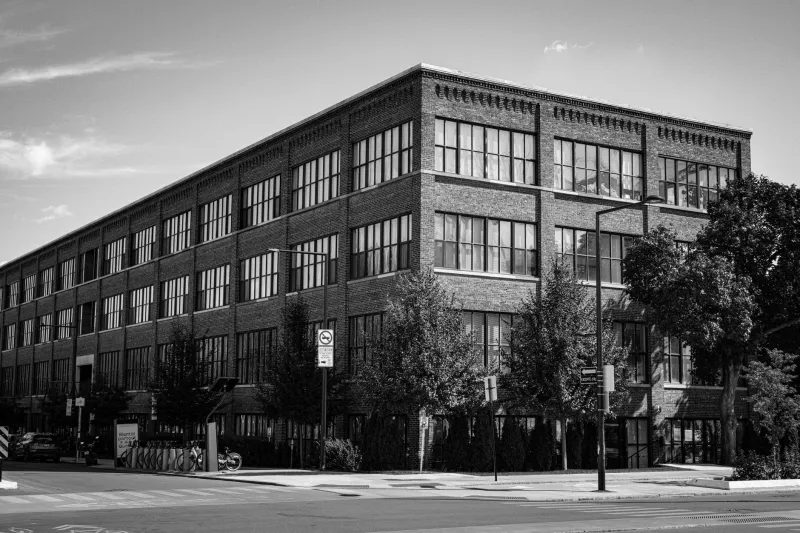
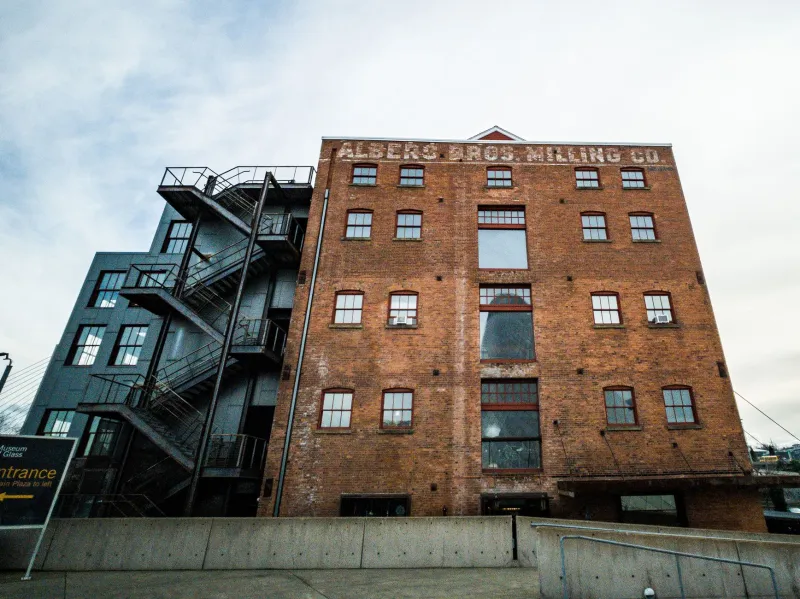
The Hidden Hierarchy: How Your Unit's Position Within a Building Is Quietly Rewriting Property Values
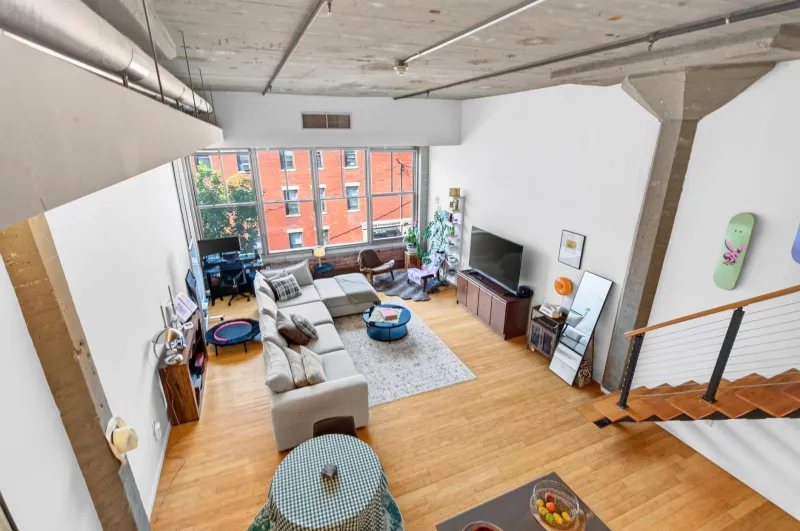
Two apartments. Same building. Same square footage. Same finishes. The difference between them — perhaps $80,000 in asking price — comes down to which floor they occupy and whether the living room faces an interior courtyard or an open city skyline. For buyers who have spent months comparing neighborhoods, school districts, and commute times, this internal geography often arrives as a surprise. It shouldn't.
Across America's urban markets, the vertical and horizontal position of a unit within a multi-family building has emerged as one of the most consequential — and least discussed — factors in residential property valuation. At 118 Mill Street, where the character of a space is understood to carry as much weight as its dimensions, this conversation feels particularly relevant. The story of a property is never told by its address alone.
The Vertical Premium: More Than Just a View
The assumption that higher floors command higher prices is not new. What is new is the degree of precision with which analysts are now quantifying that premium — and the conditions under which it evaporates entirely.
In dense coastal markets such as New York, Miami, and San Francisco, the floor-level premium can be substantial. Research from several urban real estate analytics firms suggests that, in luxury high-rise developments, each additional floor above the fifth can add between 0.5 and 1.5 percent to a unit's market value, depending on the building's height, the quality of views, and the presence of competing structures on the horizon. In a 40-story tower, the gap between a fifth-floor unit and a thirty-fifth-floor unit can easily exceed 20 percent — even when the floor plans are functionally identical.
Yet this calculus breaks down in mid-rise markets and in cities where building density is lower. In markets like Nashville, Raleigh, or Columbus — where much of the new multi-family stock tops out at six to twelve stories — the floor-level premium compresses significantly. Here, the difference between the third floor and the eighth may be negligible to buyers who are not paying for panoramic views but for proximity to walkable amenities and transit corridors.
The ground floor, long stigmatized as the least desirable position in urban residential buildings, has experienced a modest reappraisal in some markets. Buyers with mobility considerations, pet owners, and those who prioritize private outdoor access have driven renewed interest in garden-level and first-floor units, particularly in buildings where those units include dedicated patio space. Investors targeting accessible housing have taken note.
Corner Units and the Geometry of Desirability
If floor level is the vertical axis of apartment valuation, unit position within a floor plan represents the horizontal one — and corner units have long occupied a privileged place in that geometry.
The appeal is structural. Corner units typically offer exposure on two exterior walls rather than one, which translates into more windows, more natural light, cross-ventilation potential, and, in many cases, more distinctive floor plans. They also tend to share fewer walls with neighboring units, a characteristic that buyers have historically associated with privacy and noise reduction.
In practice, the corner premium varies considerably by market and building type. In converted industrial properties — the kind of adaptive reuse developments that have reshaped neighborhoods from Brooklyn's waterfront to Denver's River North district — corner units with original masonry walls and oversized factory windows can command premiums of 10 to 18 percent over comparable interior units. In standard new construction, that gap narrows, though it rarely disappears entirely.
What has shifted in recent years is the nature of what buyers mean when they describe a unit as desirable. The corner unit premium has historically been tied to views and light. Increasingly, it is also tied to acoustics.
Remote Work and the Recalibration of Interior Preferences
The widespread adoption of remote and hybrid work arrangements has introduced a new variable into the unit-position equation: noise sensitivity.
Before 2020, the average urban renter or buyer spent the majority of their waking hours outside the apartment. Street noise, elevator hum, and the ambient sound of neighbors were inconveniences rather than daily impediments. The home office changed that calculus entirely.
Surveys conducted by several real estate platforms in the years following the pandemic's initial disruption showed a marked increase in buyer inquiries specifically referencing noise levels, building acoustics, and unit orientation relative to street-facing exposure. Units positioned away from high-traffic corridors — whether those corridors are external streets or internal building hallways — have seen heightened demand in markets where knowledge-worker populations are concentrated.
This has introduced a new wrinkle into the corner-unit conversation. A corner unit facing two busy urban streets may now be less desirable to a segment of buyers than an interior unit positioned away from external noise sources, even if the interior unit offers fewer windows. The premium, in other words, has become contingent on what the buyer is optimizing for — and the post-pandemic buyer pool is not monolithic in its preferences.
Penthouse Positioning: Prestige, Practicality, and Price
No discussion of intra-building valuation would be complete without addressing the penthouse — the unit category that most dramatically illustrates the premium associated with vertical positioning and exclusivity.
In America's major urban centers, penthouse units at the top of luxury residential towers routinely sell at two to four times the per-square-foot price of mid-building units in the same development. The drivers are well understood: unobstructed views, reduced foot traffic on the floor, architectural distinction, and the social signaling that attaches to the address-within-an-address.
What is less commonly examined is the practical downside of penthouse positioning that buyers occasionally discover after closing. Roof proximity can mean greater exposure to temperature extremes, higher energy costs, and, in older buildings, a greater likelihood of water intrusion. Elevator dependency becomes more pronounced. In some markets, the penthouse premium has softened modestly as buyers weigh these considerations against the prestige value.
For investors, the penthouse represents a high-conviction, low-liquidity position. The pool of qualified buyers at the upper end of the market is smaller, and transaction timelines tend to be longer. The premium is real, but so is the concentration risk.
Practical Implications for Buyers and Investors
For those evaluating multi-unit properties — whether as primary residences or investment assets — the lesson embedded in all of this data is a familiar one: granularity matters.
A building's address establishes context. The unit's position within that building determines experience. Buyers who treat all units in a given development as interchangeable are leaving information — and potentially significant value — on the table.
Due diligence at the unit level should encompass floor plan orientation relative to the sun's path, proximity to mechanical equipment and shared amenities, the building's acoustic construction standards, and the floor level's relationship to the specific view corridor in question. In adaptive reuse developments, original structural features — exposed columns, ceiling heights, window dimensions — can vary meaningfully from unit to unit even within the same tier.
At 118 Mill Street, the conviction that every space tells a story is not a marketing sentiment. It is a framework for evaluation. The address gets you to the building. Where you go from there is a decision that deserves its own careful analysis.