Old Bones, New Premiums: Why Heritage Addresses Are Outpacing New Construction in America's Evolving Property Market
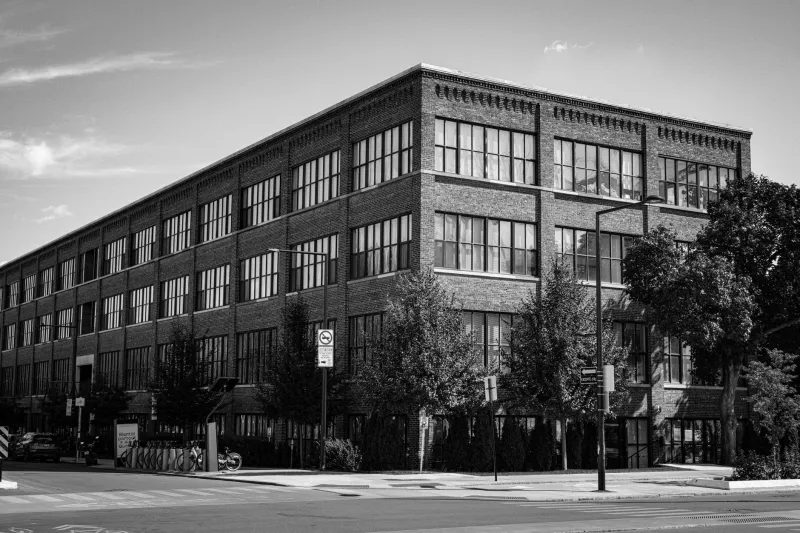
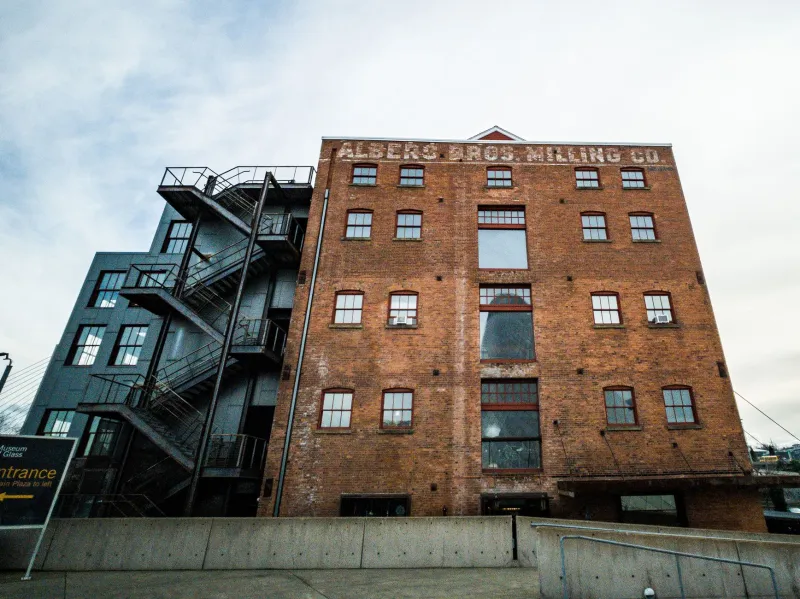
There is a peculiar irony unfolding in real estate markets from Lowell, Massachusetts, to Portland, Oregon. Developers pouring tens of millions of dollars into gleaming mixed-use towers along freshly named boulevards are watching their absorption rates stall and their per-square-foot premiums erode — while across town, a converted textile mill on a street that has carried the same name for a century and a half quietly commands rents and sale prices that defy the spreadsheet logic of any conventional pro forma. This is not an anomaly. It is a pattern, and it is accelerating.
The Authenticity Deficit in New Development
For much of the postwar era, newness was its own premium. A freshly constructed unit offered modern systems, clean finishes, and the comfort of warranties. Buyers and tenants alike gravitated toward the new, and the market rewarded developers accordingly. That calculus has shifted in ways that are only now being fully quantified.
Research from the Urban Land Institute and various regional appraisal bodies has begun to document what practitioners in cities like Pittsburgh, Providence, and Cincinnati have observed firsthand: properties situated on streets with demonstrable historical significance — streets that once anchored manufacturing districts, that carry names tied to founding families or industrial enterprises, that appear in archival photographs and local folklore — are appreciating at rates that consistently outpace comparable new construction on adjacent or nearby corridors.
The explanation is not purely aesthetic. It is structural. Heritage addresses carry what economists are increasingly calling a scarcity multiplier. There are, by definition, a finite number of addresses on any given historic thoroughfare. No new supply can be manufactured. A developer cannot replicate 118 Mill Street any more than a vintner can produce more of a sold-out vintage. When demand for that specific provenance rises — and the evidence suggests it is rising sharply — the price response is asymmetric in ways that newer corridors simply cannot match.
The Generational Shift Driving Demand
It would be tempting to attribute this trend to a narrow cohort of preservation-minded buyers with niche tastes. The data tells a different story. Millennial and Gen Z purchasers, now collectively representing the largest share of first-time and move-up buyers in the US market, have demonstrated a pronounced preference for what might be called legible history — environments where the physical evidence of prior human endeavor remains visible and interpretable.
This preference manifests in measurable ways. Exposed brick commands a documented premium in rental markets from Brooklyn to Denver. Timber beam ceilings in converted industrial spaces consistently outperform drywall equivalents in days-on-market metrics. And addresses that carry the weight of a recognizable historical narrative — a mill district, a foundry row, a warehouse corridor — generate search traffic and showing requests at rates that baffle agents accustomed to marketing based solely on square footage and amenity packages.
The psychology at work here is not nostalgia in the sentimental sense. It is something more transactional. In an era of algorithmic sameness, where new developments from Phoenix to Charlotte can feel interchangeable, an address with a distinct identity functions as a form of differentiation — and differentiation, in real estate as in any market, commands a premium.
Where Institutional Capital Is Quietly Repositioning
Perhaps the most telling indicator of this trend's durability is the behavior of institutional investors, who are not typically given to sentiment. Over the past several years, real estate investment trusts and private equity firms with long-duration mandates have been systematically acquiring assets on established heritage corridors in secondary and tertiary markets — often at prices that initially struck local observers as aggressive.
The thesis driving these acquisitions is straightforward, if underappreciated: heritage addresses represent a form of irreplaceable inventory. The land beneath a mill district cannot be replicated. The street name cannot be franchised. The accumulated cultural capital embedded in a century-old address is, by its nature, non-fungible. For investors with a ten- or twenty-year horizon, these attributes represent a hedge against the commoditization that inevitably afflicts new construction as competing supply enters the market.
Contrast this with the trajectory of many newer mixed-use developments. Built on greenfield sites or former surface parking lots along corridors without historical resonance, these projects often achieve strong initial lease-up numbers on the strength of amenity packages and marketing budgets. But as the newness premium fades and competing projects deliver nearby, the absence of an underlying narrative leaves them exposed. There is no story to tell beyond the amenities themselves, and amenities can always be replicated.
The Appraisal Gap and Its Consequences
One of the more consequential frictions created by this emerging valuation hierarchy is the persistent gap between market-observed premiums for heritage addresses and the figures produced by conventional appraisal methodologies. Standard comparable-sales approaches struggle to isolate and quantify the premium attributable to historical provenance, partly because the category is relatively new to formal analysis and partly because the relevant comparables are, by definition, scarce.
This creates practical challenges for buyers seeking financing on heritage properties, who may find that appraisals consistently come in below contract price — not because the market is wrong, but because the tools being used to measure it are insufficiently calibrated to the phenomenon. It also creates opportunity for cash buyers and well-capitalized investors who can act without appraisal contingencies, further concentrating ownership of these assets among sophisticated market participants.
The appraisal industry is beginning to grapple with these limitations. Some practitioners have begun developing supplemental methodologies that attempt to quantify the heritage premium through hedonic modeling — isolating the contribution of historical designation, street-name recognition, and architectural character to observed sale prices. The results, while preliminary, are consistent: the premium is real, it is material, and it is not adequately captured by conventional tools.
What This Means for the Thoughtful Buyer
For individual buyers and smaller investors navigating this landscape, the practical implications are worth examining carefully. Properties on established heritage corridors may carry higher acquisition costs, and the financing process may require additional diligence given the appraisal dynamics described above. But the long-term value proposition — rooted in genuine scarcity, demonstrated demand, and the kind of narrative differentiation that no amount of new construction can manufacture — deserves serious weight in any investment calculus.
The streets that have endured — that have carried commerce, community, and character across generations — are not simply older. They are rarer. And in a market where newness is no longer its own reward, rarity is precisely what the most discerning capital is chasing.
At 118 Mill Street, we understand that an address is never merely a mailing label. It is a position in a larger story — one that, on the right street, only grows more valuable with time.