Gutted and Forgotten: How Over-Renovation Is Quietly Erasing the Soul of America's Mill Conversions
There is a particular kind of disappointment that comes from stepping inside a converted mill building and finding it indistinguishable from any other luxury apartment complex in the country. The leasing brochure promised exposed brick and original timber. What greets you instead are smooth, painted walls, recessed lighting, and laminate flooring that stretches from one end of the unit to the other without a single scar of industrial memory. The history is gone. So, frequently, is the premium.
This is the adaptive reuse paradox — a quiet contradiction at the heart of one of American real estate's most celebrated asset classes. The mill conversion, long regarded as a reliable vehicle for generating heritage premiums in markets from Lowell, Massachusetts, to Chattanooga, Tennessee, is increasingly undermined by the very renovation process intended to make it livable. Developers who erase the industrial past in pursuit of a clean, contemporary finish often discover, too late, that they have also erased the financial rationale for the project.
What Buyers Are Actually Paying For
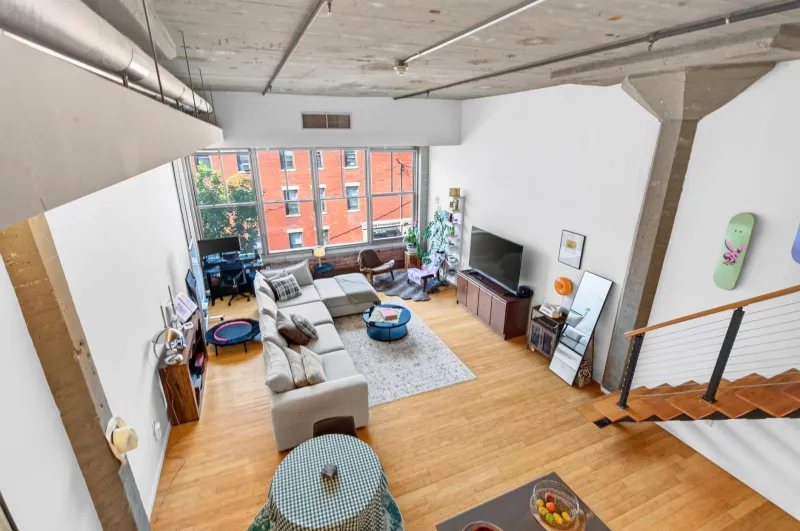
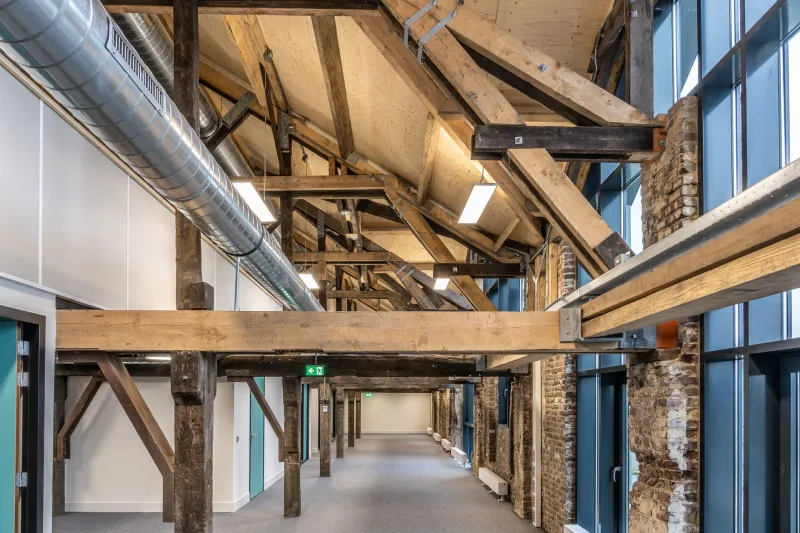
To understand why over-renovation is such a costly mistake, it is necessary to understand what draws buyers and renters to mill conversions in the first place. Market research consistently identifies authenticity as the primary motivating factor. Exposed structural beams, original masonry walls, worn hardwood floors, oversized factory windows, cast-iron columns — these are not merely aesthetic preferences. They are tangible evidence of a building's history, and buyers are willing to pay a measurable premium to live within that history.
A 2022 analysis of adaptive reuse transactions across several northeastern markets found that units preserving three or more original industrial elements commanded sale prices between 12 and 18 percent higher than comparable units in the same building where those elements had been covered or removed. The data is not surprising to those who have watched the market closely. What is surprising is how often developers disregard it.
The logic behind aggressive renovation is understandable, if shortsighted. Original brick requires sealing and ongoing maintenance. Timber beams introduce questions about insulation and acoustic performance. Uneven floors complicate furniture placement. Each of these challenges has a cost, and cost-conscious developers frequently conclude that elimination is cheaper than preservation. In the short term, they may be correct. Over the life of the asset, the calculus rarely holds.
Case Studies in Contrast
The difference between preservation-minded and erasure-minded conversions becomes most visible when comparable projects are examined side by side.
In Providence, Rhode Island, two mill buildings located within a half-mile of each other underwent conversion within the same five-year window. The first developer retained the original pine plank floors, exposed the full timber frame structure, and incorporated period-appropriate industrial lighting throughout common areas. The second developer, citing budget constraints, covered the original floors with polished concrete, drywalled over the timber frame, and opted for standard residential fixtures. Both buildings achieved initial lease-up at similar rates. Within three years, however, the first building's units were trading at resale values roughly 15 percent above comparable properties in the submarket. The second building's units were trading at parity — respectable, but unremarkable, and entirely disconnected from any heritage premium.
A similar pattern has emerged in the mill conversion corridors of the Piedmont region of North Carolina, where the textile industry left behind an extraordinary inventory of brick and timber structures. Developers who approached these buildings as blank canvases — gutting interiors down to the structural shell and rebuilding entirely in a contemporary idiom — have generally produced competent residential product. Developers who treated original material as a collaborator, designing around existing features rather than against them, have produced something rarer: addresses with genuine narrative weight that buyers return to again and again.
The Preservation Calculus
Preservation is not without its complications, and it would be misleading to suggest that maintaining original fabric is always straightforward or inexpensive. Structural timber may require remediation. Original masonry may need repointing. Industrial-era windows, while visually compelling, often perform poorly against modern energy standards and may require custom storm window solutions to meet code.
The developers who navigate these challenges most successfully tend to share a common orientation: they treat preservation costs as an investment in differentiation rather than as a burden to be minimized. The question they ask is not "how much will it cost to keep this beam?" but rather "how much value does this beam generate over the holding period of this asset?"
That reframing changes the financial model considerably. A timber beam that costs $4,000 to properly treat, reinforce, and integrate into a finished unit may contribute several times that figure to the unit's appraised value and long-term resale trajectory. The same logic applies to original brick, period hardware, factory windows, and the dozens of other industrial elements that, collectively, constitute the heritage premium.
Where the Market Is Heading
There is reason to believe that buyer sophistication around adaptive reuse is increasing. A younger cohort of urban homebuyers, many of them drawn to the authenticity that heritage addresses provide, has grown increasingly adept at distinguishing genuine preservation from what might be called "heritage theater" — the strategic deployment of reclaimed wood accent walls and Edison bulbs in buildings that have otherwise been scrubbed of any real historical character.
This discernment is beginning to register in pricing data. Properties that offer documented preservation of original elements — ideally supported by historical photography, architectural records, or formal landmark designations — are increasingly commanding premiums that exceed those of nominally "converted" buildings where the industrial past is purely decorative.
For prospective buyers evaluating mill conversion opportunities, the practical implication is clear: look past the marketing materials. Ask specifically which original elements have been retained and which have been removed. Request documentation of the preservation approach. Walk the building with attention to the details that are hardest to fake — the patina on original brick, the structural logic of an exposed timber frame, the weight and proportion of original windows. These are the elements that authenticate a building's history, and they are the elements most likely to sustain its value over time.
The Address as Archive
At 118 Mill Street, the conviction underlying every analysis we publish is that place carries meaning — that the address is not merely a location but a record. That conviction finds its clearest expression in the adaptive reuse market, where the tension between preservation and modernization is at its most acute.
The mill buildings that survive into the twenty-first century do so because they were built to last. Their brick walls, their heavy timber frames, their generous proportions — these are not accidents of aesthetics. They are the physical record of an industrial economy that shaped American cities and towns in ways that modern construction rarely replicates. When developers erase that record in the pursuit of a frictionless renovation, they do not merely diminish a building's character. They sever its connection to the premium that character was always capable of generating.
The most compelling adaptive reuse projects understand this. They do not convert mill buildings into apartments. They convert them into addresses — places where the past is not a liability to be managed but a story worth telling, one exposed beam and weathered brick wall at a time.