The Provenance Premium: How a Property's Past — and Its Online Presence — Is Shaping What Gen Z Will Pay
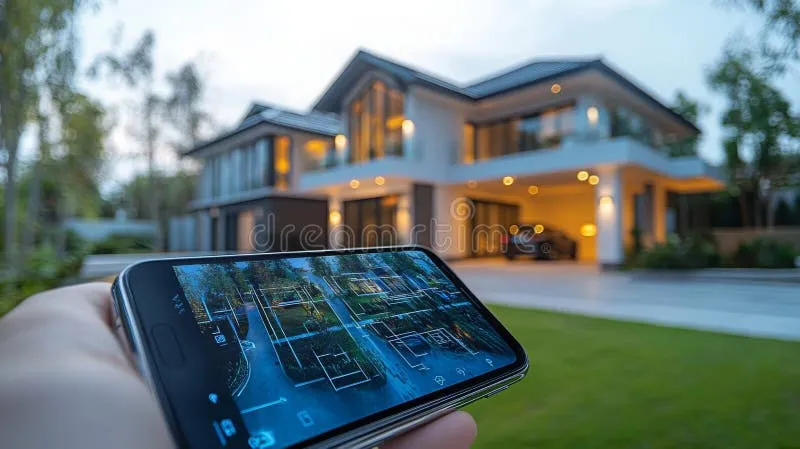
Photo: young adult homebuyer researching neighborhood on laptop smartphone urban street, via thumbs.dreamstime.com
When a twenty-six-year-old buyer in Austin recently outbid three competing offers on a modest bungalow, the deciding factor in her decision was not the school district rating or the square footage — both of which she acknowledged were unremarkable. It was a detail she had uncovered during several hours of independent research: the street had appeared in a well-regarded mid-century photograph of the city, and the neighborhood had been home to a cluster of notable local artists during the 1970s. She paid eleven percent above asking price. She described the premium as "completely reasonable."
This kind of decision-making, which might have seemed eccentric a decade ago, is becoming a recognizable pattern among younger American homebuyers. Generation Z — broadly defined as those born between 1997 and 2012, with the oldest members now approaching their late twenties — is entering the housing market with a set of evaluative criteria that diverges meaningfully from those of previous generations. Understanding that divergence is increasingly important for anyone with a stake in residential real estate.
History as a Value Driver
The concept of provenance — the documented history of an object's origin and ownership — has long been central to art and antiques markets. A painting's value is inseparable from its chain of custody; a piece of furniture commands a premium when its previous owners can be named. Gen Z, raised in an environment of radical transparency and accustomed to researching the origins of everything they consume, is applying analogous logic to real estate.
For these buyers, a property's history is not merely interesting context. It is a component of value. A home that was once occupied by a locally significant figure, that sits on a street with a documented cultural history, or that belongs to a neighborhood with a recognized identity carries an intangible premium that younger buyers are increasingly willing to quantify.
Survey data from several recent housing market studies supports this observation. When Gen Z buyers were asked to rank factors influencing their purchase decisions, "neighborhood character and history" placed consistently higher than it had in equivalent surveys of millennial or Gen X buyers. More notably, a meaningful proportion of respondents indicated they had consulted historical records, local archives, or community history websites before making an offer.
The Digital Footprint of an Address
If historical provenance is one axis of this phenomenon, digital reputation is the other — and in some respects the more consequential one. Gen Z buyers are conducting a form of due diligence that has no real precedent in prior generations: they are evaluating the social media presence of an address before they sign anything.
This means searching Instagram and TikTok for content tagged at or near a property, reviewing the visual representation of a neighborhood across platforms, and assessing whether the surrounding area generates the kind of organic content that signals cultural vitality. An address that appears regularly in user-generated content — as a backdrop for local events, as a setting for food or lifestyle photography, as a location tagged in posts by accounts with meaningful followings — is understood by these buyers to possess a form of social capital.
The implications of this are significant. Properties in neighborhoods with strong visual identities and active social media communities are benefiting from a form of demand that does not appear in traditional market analyses. Conversely, areas that are functionally desirable but digitally invisible may be underperforming relative to their objective attributes.
Real estate professionals in markets with high concentrations of younger buyers report that questions about neighborhood "vibe" and online presence are now routine components of the initial buyer consultation. The term "Instagrammable" — once confined to discussions of interior design — has migrated into conversations about location selection.
Neighborhood Branding and Its Financial Consequences
The emergence of neighborhood branding as a formal discipline in urban development reflects the same underlying dynamic. Districts that have successfully cultivated a coherent identity — whether through historical narrative, cultural programming, architectural character, or social media strategy — are demonstrating measurable price premiums over comparable areas that lack equivalent brand definition.
This is not an entirely new phenomenon; neighborhoods have always carried reputations that influenced property values. What is new is the speed and scale at which reputation can be constructed, disseminated, and monetized. A neighborhood that achieves cultural visibility through a combination of authentic character and strategic online presence can experience appreciation cycles that compress timelines previously measured in decades into periods of just a few years.
For investors and developers, this dynamic creates both opportunity and risk. Early positioning in a district with genuine historical assets and emerging social media visibility can yield returns that significantly exceed those available in established markets. However, the same mechanisms that accelerate appreciation can prove volatile; neighborhoods whose identities are perceived as manufactured rather than authentic are susceptible to rapid reputational correction.
The Psychological Architecture of the Purchase Decision
Beneath the market data, there is a psychological dimension to this trend that merits consideration. Gen Z buyers are making home purchase decisions in an environment of considerable economic uncertainty. Many have delayed homeownership longer than preceding generations, and when they do enter the market, they are seeking more than shelter or investment return. They are seeking affiliation — a sense of belonging to a place with meaning.
A property with a documented history, situated in a neighborhood with a recognized identity, at an address that carries cultural resonance, offers something that a newly constructed home in an unnamed subdivision cannot: a ready-made story into which the buyer can insert themselves. The premium they pay for that story is, from their perspective, a rational expenditure.
This has direct implications for how properties are marketed to younger buyers. Listing descriptions that lead with historical context, neighborhood narrative, and the cultural significance of an address are likely to resonate more effectively than those that prioritize square footage and fixture specifications. The story of a place is, increasingly, its most compelling sales asset.
What This Means for the Market Ahead
As Gen Z continues to accumulate purchasing power and move more decisively into the housing market over the coming decade, the premium placed on provenance, neighborhood identity, and digital presence is likely to intensify rather than moderate. Sellers and developers who recognize this shift early — and who invest in documenting, preserving, and communicating the historical and cultural assets of their properties — will be better positioned to capture the attention and the offers of this emerging buyer cohort.
At 118 Mill Street, we have always understood that an address is more than a navigational coordinate. It is a declaration of identity, a connection to history, and increasingly, a statement visible to the world. The buyers of the next decade are not merely purchasing property. They are selecting the story they want to live inside — and they are willing to pay accordingly.