From Foundry to Front Door: How America's Industrial Addresses Are Writing Their Most Compelling Chapter Yet
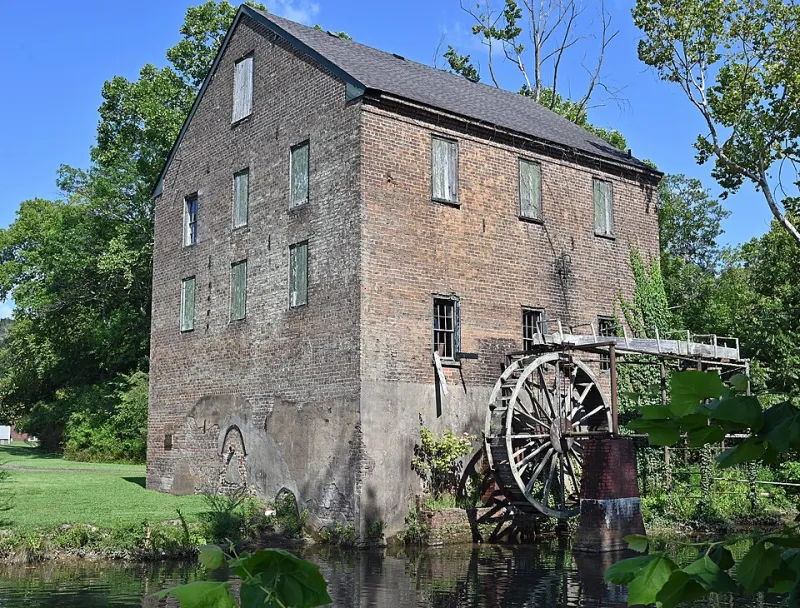
Photo: Ron Cogswell from Arlington, Virginia, USA, CC BY 2.0, via Wikimedia Commons
There is a particular quality of light that enters through a twelve-foot factory window — diffuse, generous, and entirely unlike anything a modern construction crew could replicate. It falls across exposed brick and lands on timber beams that have absorbed more than a century of labor, ambition, and memory. For a growing segment of the American real estate market, that quality of light is worth a considerable premium.
Across the country, industrial addresses once dismissed as liabilities are now among the most sought-after properties in their respective markets. The transformation is not merely aesthetic. It reflects a deeper cultural appetite for spaces that carry genuine history — addresses where the walls themselves constitute a form of storytelling.
The Architectural DNA of Industrial Spaces
What separates a converted mill or warehouse from a newly constructed building designed to evoke similar aesthetics is a matter of authenticity that discerning buyers and tenants increasingly recognize. Original cast-iron columns, hand-laid brick, wide-plank floors worn smooth by decades of foot traffic, and timber frames sourced from forests long since harvested — these are not features that can be manufactured. They are inherited.
Developers working in markets such as Pittsburgh's Strip District, Chicago's Fulton Market corridor, and the emerging mill districts of smaller cities like Lowell, Massachusetts, and Pawtucket, Rhode Island, have come to understand this distinction acutely. The address itself functions as a credential. A building that once housed a textile operation, a printing concern, or a metalworks carries an implicit narrative that contemporary construction cannot offer.
Architectural preservation specialists refer to this quality as "embodied history" — the idea that a structure absorbs and retains the character of its previous uses. When that history is legible in the physical fabric of the building, it creates what one prominent adaptive reuse developer recently described as "an emotional return on investment that shows up in both lease rates and resale values."
Unexpected Uses, Enduring Addresses
Perhaps the most visible expression of this trend is the proliferation of hospitality and cultural venues occupying former industrial footprints. Across American cities, speakeasy-inspired cocktail bars have taken up residence in former boiler rooms. Farm-to-table restaurants operate out of spaces where machinery once ran twenty-four hours a day. Art galleries and independent creative studios have colonized warehouses that once stored goods bound for regional distribution.
These are not coincidental choices. Entrepreneurs in the food, beverage, and creative sectors have discovered that an industrial address lends an establishment a form of credibility that marketing budgets alone cannot purchase. The provenance of the space becomes part of the brand. A restaurant operating out of a building with a documented industrial history at a recognizable address benefits from a narrative that its patrons can share — and increasingly, that shareability has tangible commercial value.
The same principle applies to residential conversions. Loft apartments carved from former manufacturing floors consistently command premiums over comparable square footage in conventional buildings. In markets where such inventory is limited, bidding competition for well-converted industrial units has intensified notably over the past several years.
The Selling Point Is the Story
For developers considering industrial acquisitions, the strategic calculus has shifted. Where once the primary question was whether a building's bones could support a viable conversion, the contemporary analysis increasingly incorporates the narrative value of the address itself. A mill building at a historically significant street address in a recognizable district carries marketing advantages that extend well beyond its physical attributes.
Real estate professionals working in adaptive reuse markets report that prospective buyers frequently conduct independent research into a property's history before completing a purchase. They want to know what was made there, who worked there, and how long the building has stood. This due diligence is not merely curiosity — it informs the buyer's sense of what they are acquiring and, by extension, what they will eventually be able to convey to a future buyer.
The address, in this context, functions as a form of durable value. A building that has stood for a hundred and thirty years at a particular corner has demonstrated a form of resilience that newer construction has not yet had the opportunity to prove.
Community Anchoring and Neighborhood Identity
Beyond the individual transaction, the adaptive reuse of industrial addresses plays a meaningful role in neighborhood formation. When a landmark industrial building is successfully converted, it frequently serves as an anchor around which complementary uses cluster. Residential development follows hospitality. Retail follows residential. The original address, by virtue of its scale, its history, and its visibility, becomes a organizing point for community identity.
This dynamic is observable in districts across the country where a single significant conversion — a mill, a factory, a rail depot — has catalyzed broader investment. The address that initiates this process acquires a kind of civic significance that reinforces its investment value over time.
For buyers and investors evaluating opportunities in such districts, the early stages of this cycle represent a particularly compelling entry point. The premium commanded by established industrial conversions in mature markets reflects the full appreciation of their narrative and community value. Properties in districts where that process is still unfolding may offer comparable long-term upside at a more accessible acquisition cost.
What the Market Is Telling Us
The sustained demand for industrial conversions across diverse American markets suggests that this is not a passing trend but a durable recalibration of what buyers and tenants value in a property. The appetite for authenticity — for spaces that carry genuine history and resist easy replication — shows no sign of diminishing.
At 118 Mill Street, the very name reflects an understanding of what industrial heritage means to a property's identity and value. An address rooted in the working history of a place carries weight that newer designations cannot replicate. The floors that have been walked, the walls that have witnessed change, and the beams that have borne the weight of industry for generations are not merely structural elements. They are the foundation of a story — and in today's market, that story is among the most valuable features a property can offer.