What's in a Name? Why Heritage Street Addresses Are Fetching Top Dollar
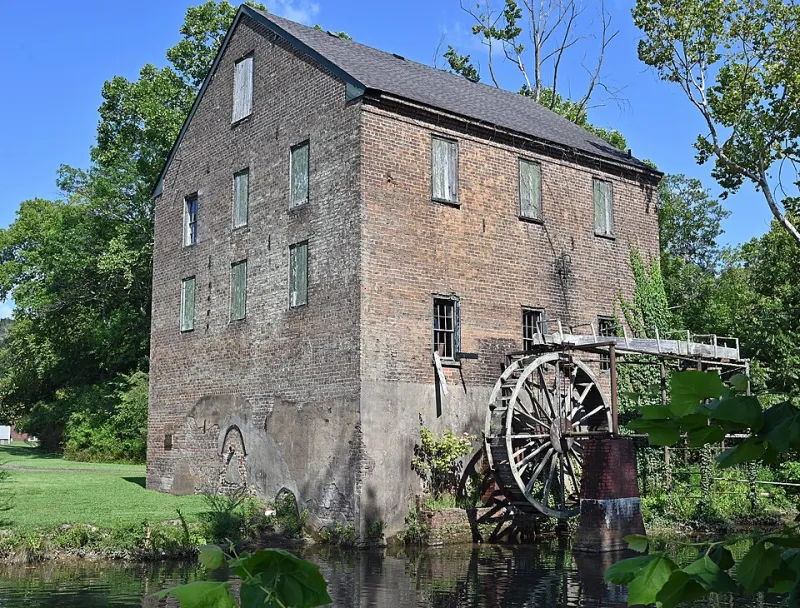
Photo: Bubba73, CC BY-SA 4.0, via Wikimedia Commons
There is a particular kind of street in American cities that refuses to be forgotten. It may run only a few blocks. It may be lined with repurposed brick warehouses, converted flour mills, or adaptive-reuse loft buildings. Yet increasingly, an address on one of these corridors—places with names like Mill Street, Foundry Row, or Iron Works Lane—commands a price premium that surprises even seasoned real estate professionals.
The phenomenon is not accidental. It is the product of intersecting forces: demographic appetite, renovation economics, and a deeply human tendency to assign meaning to place. Understanding why heritage addresses appreciate the way they do is no longer an academic exercise. For buyers and investors, it is a practical imperative.
The Psychology Behind the Premium
When prospective buyers search for a home, they are not merely acquiring square footage. They are purchasing a story they intend to inhabit. Streets named for industrial functions—mills, forges, foundries, canneries—carry an implicit narrative of labor, craft, and community. That narrative resonates with a specific and growing demographic: primarily millennials and older Gen Z buyers who feel alienated by the anonymity of master-planned subdivisions.
Research in environmental psychology has long established that place attachment influences purchasing decisions. When a street name signals authentic history, buyers perceive the address itself as a form of social capital. Living at 118 Mill Street, for instance, communicates something different from living at 4402 Parkview Terrace. One implies roots; the other implies repetition.
Real estate professionals operating in markets with established heritage corridors report that this perception translates directly into offer behavior. Bidding wars are more common. Contingencies are waived more readily. Buyers express willingness to absorb renovation costs they would reject on a comparably priced property in a newer district.
Renovation Economics and the Value Multiplier
The buildings that anchor historic street addresses often present a compelling investment calculus, though one that demands careful analysis. Adaptive-reuse structures—former textile mills, grain elevators, and machine shops converted to residential or mixed-use occupancy—carry higher per-square-foot renovation costs than new construction. Yet they also carry characteristics that new construction cannot replicate: exposed timber beams, original brick facades, wide-plank flooring, and ceiling heights that feel genuinely generous rather than engineered to appear so.
These features command a measurable premium at resale. According to the National Trust for Historic Preservation, properties in designated historic districts appreciate at a rate that frequently outpaces the broader local market over ten-year and twenty-year horizons. The gap is not marginal. In several mid-sized American cities—including Lowell, Massachusetts; Paterson, New Jersey; and Richmond, Virginia—properties within historic manufacturing corridors have appreciated between 15 and 30 percent faster than their non-historic counterparts over the past decade.
Federal Historic Tax Credits further improve the investment equation for commercial and income-producing properties. Investors who undertake qualified rehabilitation of certified historic structures may claim a 20 percent tax credit on eligible expenditures—a meaningful offset against the elevated costs of period-appropriate restoration.
Who Is Buying, and Why It Matters
The demographic profile of buyers drawn to heritage addresses is worth examining in detail, because understanding who purchases today informs who will purchase tomorrow—and at what price.
The primary buyer cohort consists of professionals between the ages of 28 and 45 who prioritize walkability, neighborhood character, and proximity to independent retail and food-and-beverage establishments over square footage or garage capacity. They are disproportionately employed in creative industries, technology, and knowledge-sector roles. They value originality in their physical environment with the same intensity that previous generations valued newness.
A secondary cohort—empty-nester buyers in their mid-50s and 60s—has emerged as a significant force in heritage corridor markets. Having spent decades in suburban environments optimized for child-rearing, these buyers are actively seeking urban re-engagement. Historic addresses offer them a sense of arrival in a place that feels earned rather than manufactured.
Both cohorts share a preference for density done well: mixed-use environments where residential units sit above or alongside retail, restaurant, and cultural programming. Mill Street addresses, historically situated at the intersection of commerce and community, often provide exactly this configuration.
The Data Beneath the Narrative
Skeptical investors are right to demand numbers alongside sentiment. The evidence, where it has been rigorously assembled, is encouraging.
A 2022 analysis by the Urban Land Institute found that adaptive-reuse residential projects in historic industrial corridors achieved average asking rents approximately 12 percent above new construction comparables in the same submarket. Vacancy rates for these properties were also lower, suggesting that the premium is supported by genuine demand rather than speculative pricing.
On the for-sale side, Zillow data aggregated across multiple markets indicates that homes on streets with heritage designations—including streets officially named or historically associated with industrial functions—sell in fewer days on market and at higher sale-to-list ratios than statistical neighbors without such designations.
None of this guarantees appreciation. Local market conditions, municipal investment in infrastructure, and the quality of individual renovation work all mediate outcomes substantially. Heritage designation is a tailwind, not a guarantee.
What Buyers and Investors Should Do Now
For those considering a purchase in a heritage corridor, several practical considerations merit attention.
First, verify the designation status of any building under consideration. A property on Mill Street that has not been formally reviewed by the State Historic Preservation Office may not qualify for tax credit programs, limiting the financial upside of renovation.
Second, assess the trajectory of the surrounding corridor rather than the individual property in isolation. A single well-renovated building on a block otherwise marked by deferred maintenance and vacancy will not benefit from the same market dynamics as a property situated within a cohesive, activated district.
Third, engage a real estate professional with specific experience in historic properties. The due diligence process for adaptive-reuse buildings differs meaningfully from that of conventional residential transactions, and the risks of overlooking structural or environmental issues are commensurately higher.
The appeal of an address like 118 Mill Street is not merely aesthetic. It is financial, psychological, and, for a growing segment of the American buying public, deeply personal. In a market that increasingly rewards authenticity, the streets that carry history in their names are proving to be some of the most durable investments available.