Before the Boom: Identifying the Overlooked Addresses Quietly Outpacing America's Prestige Markets
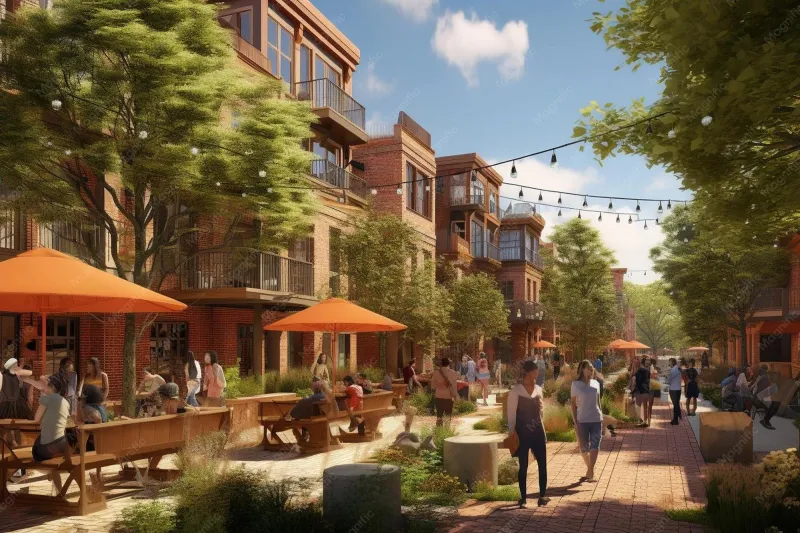
Photo: emerging urban neighborhood revitalization street view small businesses, via img.freepik.com
For generations, the calculus of American real estate followed a familiar script: proximity to established wealth, elite school districts, and manicured commercial corridors determined which addresses commanded a premium. Yet in city after city, that script is being rewritten. Neighborhoods that once occupied the margins of the market conversation are now producing returns that leave traditionally prestigious zip codes in their wake.
This is not a story about luck. It is a story about legibility—about learning to read the early indicators that precede a neighborhood's ascent and positioning accordingly.
The Data Beneath the Surface
The most compelling evidence for this shift does not come from anecdote. It comes from a convergence of measurable signals: employment growth, permit filings, demographic migration patterns, and the quiet but telling arrival of amenity infrastructure.
Consider the pattern that has played out in cities from Chattanooga, Tennessee, to Boise, Idaho, to Columbus, Ohio. In each case, neighborhoods adjacent to—but not yet synonymous with—established desirable areas began attracting a specific type of early mover: younger professionals, creative-sector workers, and small-business owners seeking square footage that prime districts could no longer afford to offer them.
Job growth data, particularly in the technology, healthcare, and logistics sectors, consistently foreshadows residential demand. When a major employer announces a facility or expands a regional footprint within or near a secondary neighborhood, the ripple effects on housing demand typically materialize within 18 to 36 months. By that time, the window for early-mover pricing has often closed.
Permit filings tell a similarly instructive story. A sustained uptick in residential renovation permits—distinct from new construction, which signals a later and more expensive stage of development—indicates that existing property owners and small investors are betting on a neighborhood's trajectory with their own capital. That signal carries weight.
The Amenity Sequencing Model
One of the most reliable frameworks for evaluating an emerging address is what urban economists sometimes call amenity sequencing: the predictable order in which commercial services arrive in a gentrifying neighborhood.
The sequence typically begins with independent coffee shops, art studios, and specialty food vendors—businesses with low overhead and high tolerance for risk. These are followed by fitness studios, farm-to-table restaurants, and boutique retail. The final stage—which almost always signals that pricing has caught up with quality—is the arrival of national chains and luxury service providers.
For the investor or buyer seeking value ahead of the market, the sweet spot lies between the first and second stages. At that inflection point, the neighborhood has demonstrated enough cultural momentum to attract continued investment, but has not yet been fully repriced by the broader market.
Several mid-sized American cities are currently hosting neighborhoods at precisely this stage. The South Side of Pittsburgh, portions of West Memphis adjacent to the Arkansas border, and select corridors within Kansas City's East Side all exhibit the early amenity signatures of neighborhoods on the cusp of broader recognition.
Demographic Shifts as Forward Indicators
Population data, when disaggregated by age cohort and educational attainment, offers another layer of insight. When a neighborhood begins attracting a disproportionate share of residents aged 25 to 34 with college or graduate degrees, it is not merely a cultural observation—it is a leading indicator of future housing demand and commercial investment.
This demographic cohort tends to be highly mobile, economically productive, and willing to accept current imperfection in exchange for future upside. They are, in effect, performing their own due diligence on a neighborhood's trajectory and voting with their leases and mortgages.
The U.S. Census Bureau's American Community Survey, updated annually, provides accessible data on these shifts at the census tract level. Cross-referencing this information with local permit databases and business license filings can produce a surprisingly granular picture of where momentum is building.
The Infrastructure Multiplier
Public infrastructure investment—often overlooked by private investors focused on commercial signals—can function as a powerful multiplier for neighborhood value. The announcement of a new transit line, the redesign of a major arterial road to include protected bike lanes, or the remediation of a formerly contaminated industrial site can each catalyze private investment in ways that reshape an address's long-term potential.
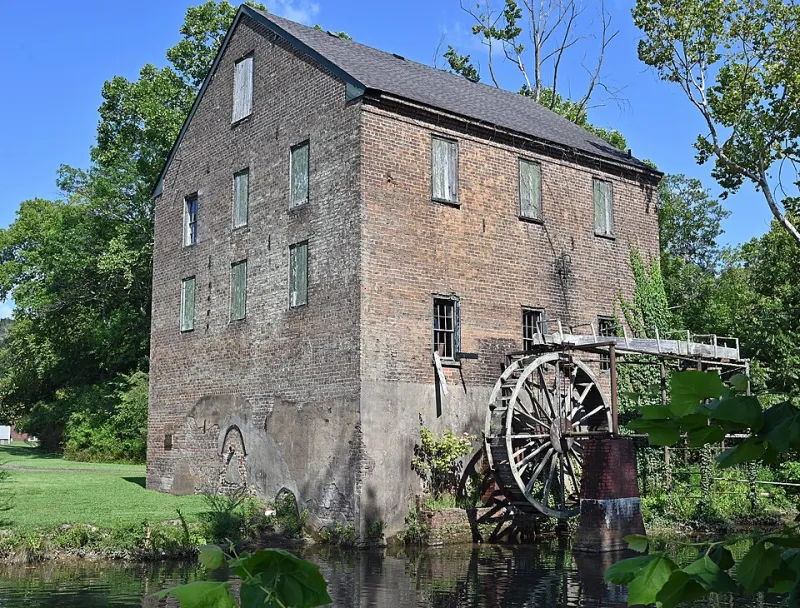
Historically, neighborhoods within a half-mile radius of new transit stops have appreciated at rates meaningfully above their metropolitan averages in the years following service commencement. The same principle applies to waterfront reclamation projects, greenway development, and the conversion of former industrial parcels—addresses not unlike those that have long defined the character of mill districts across the American Northeast and Midwest.
Municipalities often telegraph these investments years in advance through capital improvement plans and regional transportation authority documents. These are public records, and they are among the most underutilized research tools available to the individual buyer or investor.
Practical Guidance for the Early Mover
For those considering a position in an emerging neighborhood, several disciplines apply.
First, prioritize structural fundamentals over cosmetic condition. In neighborhoods undergoing transition, properties with sound bones but dated finishes represent the most favorable risk-adjusted opportunities. The neighborhood's rising tide will lift well-located assets; deferred structural maintenance is a liability that appreciation alone cannot always resolve.
Second, evaluate the ownership landscape. Neighborhoods with high rates of longtime owner-occupancy tend to transition more gradually and sustainably than those dominated by absentee landlords or distressed sales. The former signals community investment; the latter can introduce volatility.
Third, engage directly with local planning departments. Staff members at these offices are frequently willing to discuss pending applications, upcoming zoning reviews, and long-range planning priorities. The information is public, and the conversation can be illuminating.
Finally, consider the relationship between an emerging address and its established neighbors. Proximity to a recognized desirable area—without yet carrying its price premium—is one of the most durable value propositions in residential real estate. The address that sits at the edge of two worlds, one already arrived and one still becoming, often represents the most compelling opportunity of all.
The Story the Address Is Still Writing
At 118 Mill Street, we believe that the most interesting properties are frequently those whose stories are still in progress. The neighborhoods described here are not finished products. They are works in development—addresses whose full value has not yet been recognized by the broader market, but whose trajectories are increasingly legible to those willing to look carefully.
The prestige markets of tomorrow are, in many cases, the overlooked addresses of today. The question for the thoughtful buyer or investor is not whether that transformation will occur, but whether they will be positioned to participate in it.