Location as Legacy: A Practical Guide to Choosing an Address That Builds Wealth Over the Next Two Decades

Photo: Nizzan Cohen, CC BY 4.0, via Wikimedia Commons
Real estate's most durable maxim — that location is everything — has always contained more complexity than the phrase suggests. Location is not static. It is a variable, shaped by infrastructure investment, demographic movement, cultural momentum, and the compounding effect of small decisions made by thousands of individuals over time. The neighborhood that feels peripheral today may, by 2040, feel central. And the address that seems safely established may, over the same period, stagnate as the energy of a city migrates elsewhere.
For buyers entering the market now, the challenge is not simply finding a home they can afford or a property that pencils out as a rental. It is identifying the addresses whose underlying fundamentals suggest they will appreciate meaningfully over a twenty-year horizon — before that appreciation becomes obvious enough to be priced in.
Why Most Buyers Evaluate Location Incorrectly
The conventional approach to location analysis is essentially retrospective. Buyers examine recent comparable sales, note which neighborhoods have appreciated over the past five years, and extrapolate forward. This methodology has a significant structural flaw: by the time a neighborhood's appreciation is visible in the data, much of the gain has already been captured by earlier entrants.
A more useful framework evaluates leading indicators rather than lagging ones. These are the conditions that precede appreciation — the signals that a neighborhood is accumulating the social, physical, and economic capital that eventually translates into higher property values. They are rarely dramatic. More often, they are quiet and incremental, which is precisely why they are so frequently overlooked.
The Five Indicators That Precede Appreciation
Walkability infrastructure investment. Research published by the Urban Land Institute and the National Association of Realtors has consistently found a strong correlation between walkability scores and residential property values. More importantly for prospective buyers, investments in pedestrian infrastructure — new sidewalks, protected bike lanes, crosswalk improvements, street-level retail activation — tend to precede walkability score improvements by several years. A municipality committing capital to pedestrian infrastructure in a currently low-scoring neighborhood is signaling a directional intent that buyers can act on before the market reflects it.
Institutional anchor activity. Universities, hospitals, and major cultural institutions generate sustained economic activity that stabilizes and gradually elevates surrounding neighborhoods. When one of these anchors announces an expansion — a new research campus, a satellite facility, a performing arts venue — the ripple effect on adjacent property values is predictable, if not always immediate. Buyers who identify these announcements early and act before construction begins frequently capture significant appreciation by the time the project opens.
Independent commercial tenancy. Chain retail follows proven markets. Independent businesses — the specialty bookstore, the chef-driven neighborhood restaurant, the independent pharmacy — tend to arrive in neighborhoods before the chains do, drawn by lower rents and a willingness to accept more risk in exchange for greater autonomy. A sustained increase in independent commercial tenancy along a commercial corridor is among the most reliable early indicators of residential demand growth. It suggests that a community of discerning, often younger consumers has begun to concentrate in the area.
Zoning reform and density allowances. Local governments that are actively updating zoning codes to permit higher density, mixed-use development, and accessory dwelling units are, in effect, signaling confidence in a neighborhood's trajectory. These reforms also tend to attract developer attention, which accelerates the physical transformation of the streetscape. Buyers who monitor municipal planning agendas — public records that are rarely reviewed by individual purchasers — gain access to forward-looking intelligence that is not reflected in current pricing.
Cultural production. Artists, musicians, and creative professionals have long served as unintentional advance scouts for neighborhood appreciation, occupying low-cost spaces that later attract the amenities and residents who drive prices upward. The pattern is well-documented in cities from New York to Nashville. Less well-documented is the fact that the early stages of this process — the arrival of studios, galleries, and rehearsal spaces in a previously overlooked district — are visible years before the mainstream market responds.
The Role of the Address Itself
Beyond neighborhood-level analysis, the specific character of a street address carries information that aggregate data cannot fully capture. Streets with historical significance, distinctive architectural vocabulary, or proximity to natural features — rivers, parks, elevated terrain — tend to demonstrate more resilient appreciation than those whose primary appeal is proximity to current commercial activity, which can shift.
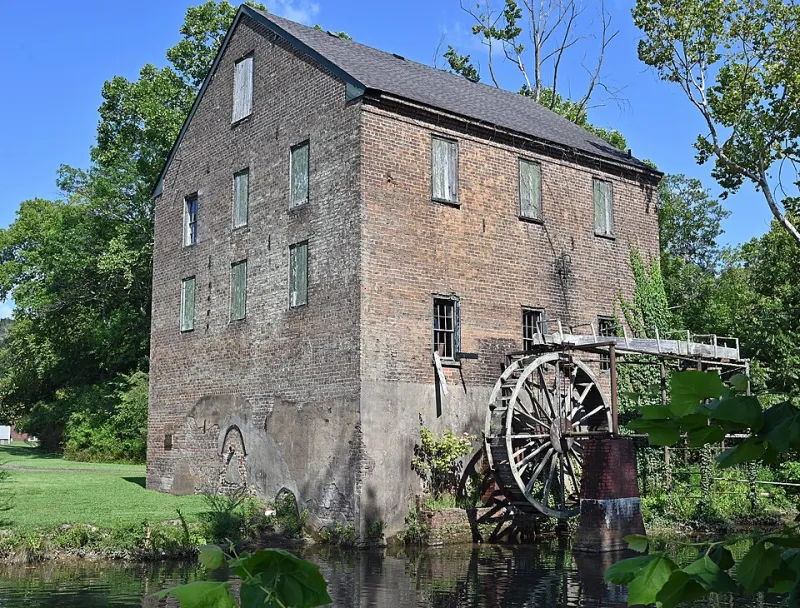
This is one reason why addresses in districts defined by their physical heritage — the mill district, the warehouse row, the riverfront corridor — frequently outperform comparable properties in newer developments over long time horizons. The built environment in these locations cannot be easily replicated. Its scarcity is structural, not circumstantial, and scarcity is the precondition for sustained appreciation.
Building a Personal Location Evaluation Framework
For buyers seeking to apply these principles practically, the process begins with a willingness to evaluate neighborhoods that are not yet on the mainstream radar. This requires some tolerance for ambiguity and a longer investment horizon than most buyers formally articulate to themselves.
A useful starting point is to identify three to five neighborhoods within your target market that score below the city median on current price-per-square-foot but demonstrate at least three of the five leading indicators described above. Within those neighborhoods, prioritize streets with distinctive physical character — architectural cohesion, mature tree canopy, proximity to water or green space — over streets whose primary appeal is convenience to current amenities.
Once you have identified candidate addresses, examine the municipal capital improvement budget for planned infrastructure investments in those areas, review recent zoning applications and planning commission minutes, and assess the trajectory of independent commercial activity along the nearest retail corridor. These are public documents. They are rarely consulted by individual buyers, which is precisely what makes consulting them valuable.
The Long View
Property ownership is, at its core, a twenty-year decision wearing the clothing of a five-year one. The buyers who will look back on 2024 and 2025 as pivotal years are not necessarily those who purchased in the most desirable neighborhoods at the time — they are those who identified the neighborhoods that would become desirable, and committed to them before the evidence became undeniable.
At 118 Mill Street, we understand that every address carries a story not yet fully written. The most compelling chapters, as with the most compelling investments, belong to those with the patience and the framework to recognize a great narrative before it reaches its climax.