Converted to a Lesser Purpose: Why Residential Transformation Is Costing Mill Buildings Their Greatest Economic Potential
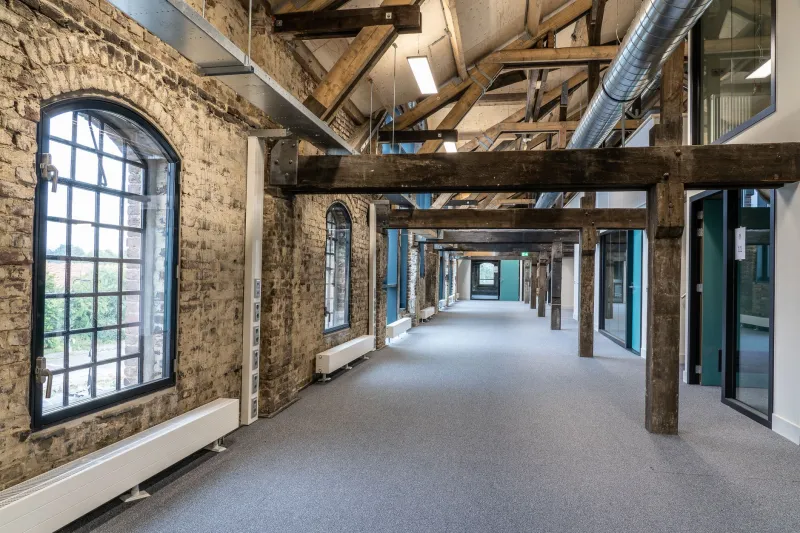
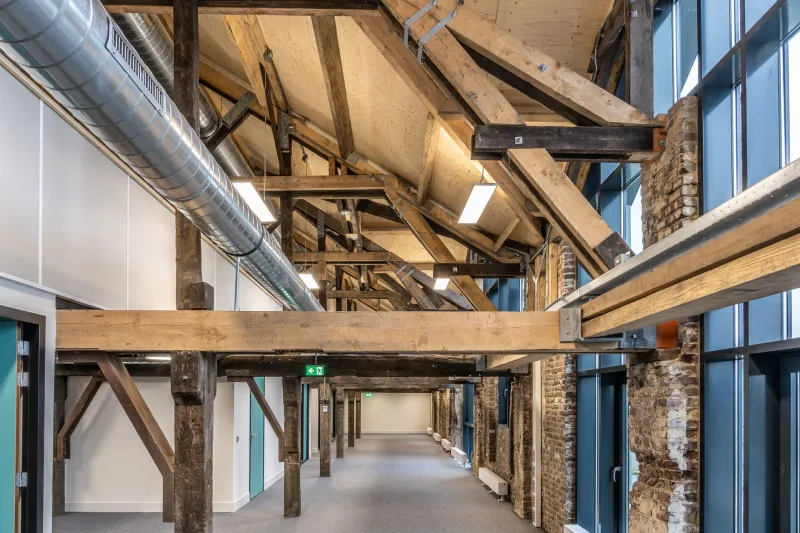
There is something deeply compelling about a converted mill apartment. Exposed brick, timber beams worn smooth by generations of industrial use, windows tall enough to frame an entire city block—these are spaces that carry weight, both literally and figuratively. The residential conversion narrative has proven irresistible to developers, municipalities, and buyers alike. Yet a quieter, more consequential story is unfolding beneath the surface of America's adaptive reuse boom, one that challenges a foundational assumption of modern property development: that converting industrial square footage into housing always represents the highest and best use of a building.
The evidence, examined carefully, suggests otherwise.
The Residential Default and Its Hidden Costs
When a mill building becomes available for redevelopment, residential conversion is rarely chosen after exhaustive analysis. More often, it emerges as the path of least resistance—familiar to lenders, legible to municipal planning boards, and straightforward to market. Developers understand how to price apartments. Banks understand how to underwrite them. The residential track is well-worn, and in real estate, well-worn paths carry significant gravitational pull.
What this default obscures is the economic architecture that made these buildings valuable in the first place. Mills were not designed to be inhabited. They were designed to produce—to concentrate labor, machinery, and commerce within a single structure in ways that generated economic activity far exceeding the value of the building itself. That productive logic did not disappear when the looms went silent. It simply waited for a new expression.
Buildings that have preserved mixed-use or light industrial occupancy—housing makers, fabricators, small-batch manufacturers, creative studios, and specialty commercial tenants alongside or instead of residential units—are demonstrating that the productive logic of the original mill remains commercially potent. The returns, in many cases, are substantially stronger than those achieved by full residential conversion.
Case Studies in Restraint
Consider the trajectory of several notable properties across the Northeast and Mid-Atlantic, regions where mill building stock remains abundant and conversion decisions carry long-term consequences.
In Pawtucket, Rhode Island, a former textile mill that resisted full residential conversion in the early 2000s—retaining ground-floor and mezzanine space for light manufacturing and creative commercial tenants—has seen sustained occupancy rates and rental income growth that outpaced comparable fully residential conversions in the same corridor. The building's mixed-use profile attracted anchor tenants whose own visibility and foot traffic created a self-reinforcing commercial ecosystem. Residential units on upper floors commanded premiums precisely because of the commercial vitality below, not in spite of it.
In Lowell, Massachusetts, a city whose relationship with its mill heritage is both intimate and complicated, properties that maintained maker-space and small-business occupancy through the 2010s are now positioned at the center of a renewed economic geography. The businesses they incubated—design firms, specialty food producers, artisan fabricators—became employers, tax contributors, and neighborhood anchors. The buildings that housed them became genuinely mixed-use assets rather than simply residential properties with attractive bones.
Contrast these outcomes with fully residential conversions in similar markets, where the economic contribution of the building is largely limited to property tax revenue and the consumer spending of its residents. The productive multiplier—the capacity of a building to generate economic activity beyond its own walls—is dramatically diminished when the last commercial tenant signs off and the last loft unit signs on.
The Tenant Quality Equation
Beyond aggregate returns, mixed-use mill buildings have demonstrated a consistent advantage in the caliber of tenants they attract. Light industrial and creative commercial occupants—the kinds of businesses that seek out high-ceiling, high-character spaces with loading access and flexible floor plates—tend to be established enterprises with stable financials, long lease horizons, and genuine operational need for the specific attributes that mill buildings provide.
These are not tenants who will relocate because a newer building opened nearby. They are, in many cases, tenants for whom the mill building is functionally irreplaceable: the ceiling height accommodates their equipment, the floor loads support their operations, the character of the space is integral to their brand. This operational dependency translates directly into lease stability and reduced vacancy risk—factors that any serious investor should weigh heavily against the apparent simplicity of residential underwriting.
Residential tenants, by contrast, operate within a far more liquid market. They respond to new supply, to lifestyle shifts, to employment changes. The residential mill unit is desirable, but it is not irreplaceable in the way that a purpose-fit commercial space often is.
What Neighborhoods Actually Need
The economic argument for preserving productive use in mill buildings extends beyond individual property returns into the broader question of neighborhood health. Residential monocultures—blocks and districts composed almost entirely of housing—are increasingly understood by urban economists and planners as fragile ecosystems. They generate limited daytime activity, support fewer local businesses, and create neighborhoods that function well on evenings and weekends but feel evacuated during working hours.
Mill buildings that retain commercial and light industrial occupancy contribute something residential units structurally cannot: employment. They bring workers into a neighborhood who spend money at nearby businesses, who interact with residents, who animate streetscapes during hours when purely residential districts go quiet. This employment function was the original purpose of the mill, and its preservation—even in modernized form—continues to generate neighborhood-level economic value that no amount of residential density can fully replicate.
For investors and developers thinking beyond the immediate transaction, this distinction matters. Neighborhoods with genuine economic diversity—where people both live and work—have historically demonstrated greater resilience during downturns, stronger long-term appreciation trajectories, and more sustained demand from the kinds of tenants and buyers who represent durable value.
The Harder Calculation
None of this is to suggest that residential conversion is without merit. There are mill buildings where the structural condition, location, or market context makes residential the genuinely optimal path. The argument here is more precise: that residential conversion has become reflexive rather than analytical, and that this reflexivity is systematically undervaluing the productive potential embedded in some of America's most architecturally and economically significant building stock.
The harder calculation—the one that accounts for long-term return, tenant stability, neighborhood economic contribution, and the irreplaceable functional attributes of mill-scale space—frequently points toward a different conclusion than the one the development industry has been drawing by default.
At 118 Mill Street, where every space is understood to carry a story worth telling honestly, that conclusion deserves serious attention. The buildings that have resisted the residential tide are not anachronisms. In many cases, they are the smartest investments on the block.