When the Numbers Change: The Hidden Stakes of Municipal Address Renumbering in America's Evolving Neighborhoods
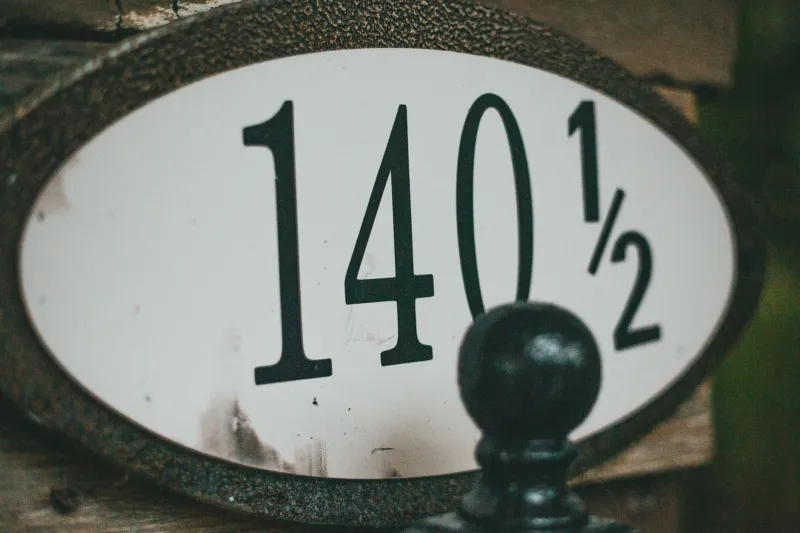
A street address is far more than a postal convenience — it is a legal identifier, a community anchor, and increasingly, a market signal. When municipalities or developers alter those numbers, the consequences ripple through property values, neighborhood identity, and real estate transactions in ways that are rarely anticipated and seldom straightforward.
At 118 Mill Street, we have long understood that an address carries meaning well beyond its digits. The story of how those digits get assigned, challenged, and occasionally rewritten reveals something essential about the tension between urban progress and the communities that live through it.
The Mechanics of Renumbering: Why Cities Change What Already Works
Municipal address systems were never designed to be permanent. Many American cities inherited numbering grids from the nineteenth century — schemes that made sense when neighborhoods were sparsely developed but grew increasingly incoherent as infill construction, parcel subdivision, and annexation introduced gaps, duplications, and logical contradictions. A block might jump from 412 to 490 because a warehouse was subdivided decades ago. A new mixed-use development might receive a number that has already been retired, creating confusion for emergency services and title companies alike.
The practical impetus for renumbering is often public safety. Emergency dispatchers have long flagged address inconsistencies as a genuine hazard. In rural counties across the South and Midwest, the transition from rural route numbers to standardized 911-compatible addresses during the 1990s and 2000s required renaming and renumbering thousands of properties — a logistical undertaking that generated substantial community friction even when the safety rationale was unambiguous.
Urban revitalization projects introduce a different dynamic. When a formerly industrial corridor is rezoned for mixed use and a developer constructs a large-scale residential project, the resulting address scheme may bear little resemblance to the surrounding block's historical numbering. This is not always an accident. A freshly minted address can serve as a subtle form of rebranding — a signal that the property belongs to a new chapter rather than an older one.
The Politics Beneath the Numbers
Address changes are rarely purely administrative decisions. They are contested terrain, and the contestation is frequently political in the most local sense of the word.
Long-term residents often experience renumbering as a form of erasure. In neighborhoods with strong ethnic or cultural identities, a street address accumulates associations over generations — it appears on business cards, in family histories, on church bulletins, and in the institutional memory of community organizations. To alter that address, even for ostensibly neutral reasons, can feel like an act of dispossession. This perception is particularly acute in communities that have already experienced displacement pressures from gentrification.
Conversely, property owners in areas carrying negative associations — high crime rates, industrial contamination, or simple neglect — sometimes actively seek renumbering as a mechanism for reputational reset. Real estate professionals working in transitional neighborhoods are well acquainted with the phenomenon: a new address, particularly one that evokes a more desirable adjacent district, can meaningfully shift buyer perception even when the physical property is unchanged.
Several American cities have documented this dynamic explicitly. Portions of Los Angeles's Arts District, for instance, have seen addresses quietly migrate toward numbering schemes that align them with more established commercial corridors. Similar patterns have emerged in post-industrial neighborhoods in Pittsburgh, Cincinnati, and Detroit, where developers have negotiated address assignments with municipal authorities as part of broader incentive packages.
What Renumbering Does to Property Values
The market consequences of address changes are genuinely mixed, and the academic literature on the subject is thinner than one might expect given the stakes involved.
In the short term, renumbering creates friction. Title searches become more complex when a property has carried multiple addresses over its history. Lenders require additional documentation. Insurance carriers occasionally flag the discrepancy. For buyers conducting due diligence, an address history with multiple entries can raise questions that require time and legal expertise to resolve — costs that are sometimes reflected in negotiated purchase prices.
Over the medium term, however, a well-executed address transition associated with genuine neighborhood investment can contribute to appreciation. The mechanism is largely psychological: a new address, embedded in a new development with new amenities and a new marketing narrative, helps buyers mentally separate the property from whatever preceded it. This is not manipulation so much as the real estate market doing what it has always done — pricing perception alongside fundamentals.
The risks are most pronounced when renumbering is attempted as a substitute for substantive investment rather than a complement to it. Communities that have rebranded through address changes without accompanying improvements in infrastructure, safety, or commercial vitality have generally found that the market corrects for the discrepancy within a relatively short period.
Case Studies in Address Identity: What the Evidence Suggests
The experience of mixed-use redevelopment projects across the United States offers instructive examples. In Nashville's Gulch neighborhood, the transition from a rail yard to a dense residential and commercial district involved entirely new address assignments. The new numbering, anchored in a coherent grid, helped establish the Gulch as a distinct destination rather than a continuation of surrounding districts. Property values in the area have appreciated substantially over the past fifteen years, though it is difficult to isolate the contribution of address clarity from the many other factors driving demand.
By contrast, certain urban renewal efforts from the mid-twentieth century — particularly those associated with large-scale public housing construction — created address schemes that became stigmatized alongside the projects themselves. The lesson drawn by contemporary planners is that address systems should integrate rather than isolate: numbering that connects a new development to its surrounding urban fabric tends to produce better long-term outcomes than schemes that mark a project as categorically distinct.
Smaller-scale examples are equally telling. In several New England mill towns undergoing adaptive reuse, developers have chosen to preserve historical building numbers — or even to foreground them in marketing materials — precisely because the industrial heritage those numbers evoke has become a selling point rather than a liability. The address, in this context, is not being changed; it is being reinterpreted.
Navigating an Address Change: Practical Considerations for Buyers and Investors
For anyone evaluating a property that has undergone or is subject to a pending address change, several practical steps merit attention.
First, a thorough title search should include all known prior addresses associated with the parcel. Liens, easements, and other encumbrances recorded under a previous address remain legally binding and must be identified and disclosed.
Second, buyers should request documentation from the relevant municipal authority confirming the current official address and any pending changes. In jurisdictions with active redevelopment plans, address assignments can remain provisional for extended periods.
Third, investors considering properties in transitional neighborhoods should assess whether an address change reflects genuine community investment or primarily a rebranding effort. The distinction matters enormously for long-term value.
Finally, and perhaps most importantly, it is worth remembering that an address is ultimately a form of communication. It tells a story — to buyers, to neighbors, to the market, and to the community itself. The most durable addresses are those whose stories are grounded in something real.
At 118 Mill Street, that is precisely the kind of story we believe in.